

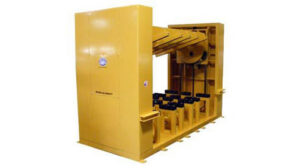
Die splitters, also called die separators, open a die or mold and hold the halves safely for inspection, repair and tryout. They make die maintenance a safe one-person job, without chain hoists, lead mallets and two or three toolmakers.
Shop Die & Mold SplittersRequest a QuoteCall (800) 863-3164How They Work · Types · Titan Models · Videos · Choosing · What We Need · FAQs
How a Die Splitter Works
Die splitters (or die separators) provide a safe and efficient method of separating dies or molds and allow for safe handling of them during maintenance. The die is loaded onto the splitter by crane, forklift, die cart or a load table and clamped to machined platens. The splitter lifts the upper half off the lower half and turns it face up so both halves can be serviced, then puts the die back together after service.
Taking a die apart by hand takes chain hoists, lead mallets and two or three toolmakers, with the risk of the halves slipping or jamming as they separate or go back together. A splitter makes inspection, repair and tryout a fast, safe one-person operation and frees up tool room time.
Splitters close the loop in quick die change: the die leaves the press on a cart, goes to the tool room, and some Green Valley splitters dock directly with the die or mold cart. See the quick die change guide.
Types of Splitters
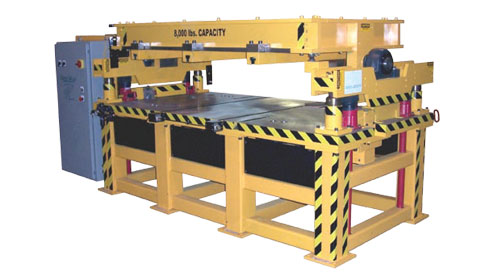
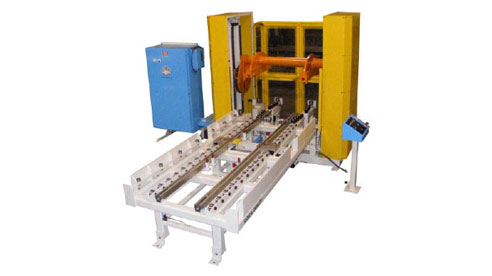
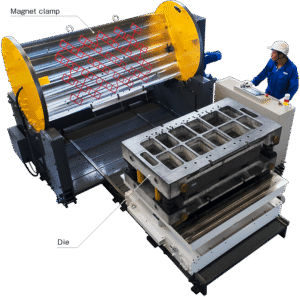
For the rest of die maintenance, Green Valley also builds die maintenance tables with drawer and die lifter options, and mold upenders and tippers that turn molds safely for service. See the Green Valley line card.
Green Valley Titan Splitters
Green Valley builds splitters from 1,000 lb to 70,000 lb, standard and custom, and any model can be built for more or less capacity. The models shown on this page before, with Green Valley's current descriptions:
| Model | Capacity | Type | Features |
|---|---|---|---|
| Titan 2288 | 8,000 lb | Vertical die splitter | Adjustable upper T-slots, open upper frame, VFD motor control, die lifters for side loading, upper deck rotates 180° |
| Titan 2643 | 12,000 lb | Die separator | Powered transfer to and from the load/unload table, powered centering, push-button PLC controls, removal of the base and inverted upper die, safe reassembly |
| Titan 2661 | 14,000 lb | Horizontal die/mold splitter | Crane loaded, 110V hydraulic power, precision machined bolster with T-slots |
| Titan 3120 | 30,000 lb | Die splitter | Removes the lower half, inverts and lowers the upper half, reassembles the die after service, docks with a Green Valley die cart |
| 173816 | 5,000 lb | Horizontal mold splitter | Fully machined tool surfaces, independently rotating platens, controls on a tethered pedestal, mates with a mold change cart |
From Green Valley’s published model pages. Confirm current specifications with PRI when you quote.
See Them Work
Titan 2288 die splitter, 8,000 lb
Titan 2643 die splitter, 12,000 lb, on site
Titan 3120 die splitter, 30,000 lb, test phase
Titan 173816 horizontal mold splitter
How to Choose a Splitter
- 1Heaviest die or moldStart with the heaviest die or mold you need to split, and allow for the ones you'll add.
- 2Footprint and shut heightThe die or mold footprint and shut height size the platens and the opening stroke.
- 3Vertical or horizontalGreen Valley's die splitters split vertically and turn the upper half over; its mold splitters split horizontally with platens that fold back. Crane-loaded horizontal units handle dies and molds.
- 4How the die arrivesCrane, forklift, die cart or load table. Some splitters dock with a Green Valley die or mold cart.
- 5What it has to doSeparate only, or also invert the upper half, remove the halves for service and reassemble the die.
- 6Power and controlsConfirm the power at the install location. Controls range from push-button PLC panels to tethered pendants.
Send what you have:
- Heaviest and lightest die or mold weight
- Footprint and shut height
- Die or mold; vertical or horizontal split
- How it's loaded: crane, forklift, cart or table
- Invert, remove halves and reassemble?
- Clamping: T-slots, bolt pattern or magnetic
- Power available at the install location
- Tool room floor space
Splitter Brands PRI Offers


Help From PRI
PRI's Application Engineers size the splitter to your heaviest die, plan how it is loaded and where it sits in the tool room, and tie it to the carts that bring dies from the press. PRI coordinates installation and operator training with Green Valley and supports the splitter afterward. For dies being adjusted or repaired in the press, PRI also supplies safety blocks; see PRI services for press safety surveys.
Frequently Asked Questions
What is a die splitter?
A die splitter, or die separator, separates the halves of a die or mold and holds them safely for inspection, maintenance and tryout, then puts the die back together.
What is the difference between a die splitter and a mold splitter?
Green Valley's die splitters split vertically and rotate the upper half 180 degrees for servicing. Its mold splitters, for plastic injection molds, split horizontally with platens that fold back 90 degrees. Both are built to suit your tools.
What capacities are available?
Green Valley builds splitters from 1,000 lb to 70,000 lb, and any model can be built for more or less capacity. The Titan models on this page run from 5,000 to 30,000 lb.
Can a splitter work with my die cart?
Yes. Some Green Valley splitters dock with its die carts, such as the Titan 3120, and its mold splitters can mate with a mold change cart.
Why use a splitter instead of a crane and hoists?
Separating a die with chain hoists and mallets takes two or three toolmakers and risks the halves slipping or jamming. A splitter lets one person separate, service and try out the die, and turns the upper half over without flipping it on crane wire ropes.
Related Guides
Quick Die Change · Die Carts · Die Storage Racks & Tables · Die Clamps · Die Rotators (catalog)
Send us your heaviest die or mold and how it reaches the tool room. PRI will recommend the splitter and quote it.
Shop Die & Mold SplittersRequest a QuoteCall (800) 863-3164