Overview
New London Engineering PlastiTrak plastic belt conveyors come in two series. Model 1000 units, with a 12 ga frame, convey lighter products such as bottles, cans, packages and plastic parts on plastic or steel chain. Model 2000 units, with a 10 ga frame, carry boxes and cases and heavier products such as ammunition casings and stamped or machined parts. Straight, curved, flighted, curved-and-flighted and nose-over versions cover horizontals, inclines, curves and combinations. PRI supplies the full PlastiTrak line.
Key Features
- Sprocket drive
- Belts are positively driven with sprockets rather than pulleys, which eliminates tracking issues. The belts will not walk, slip or mistrack.
- Over 50 belt styles
- Flat top, flush grid, roller top, friction top and flighted belts, plus plastic and steel chains, cover almost every form of conveying and product type.
- ACT (Application Change Technology)
- NLE's exclusive ACT system leaves room for different sprocket and belt styles. To change belts when the application or product changes, loosen the bolts on the shaft's floating assembly and align the arrows to the designated belt number.
- Low-friction wear strips
- A customized wear strip design reduces belt friction and extends belt and wear strip life.
- Modular belts
- Only the damaged module needs to be replaced rather than the entire belt, and the belt does not need to be re-tracked.
- Robot cell ready
- PlastiTrak is often used to move material in and out of automated robotic cells. Steel chain options on the 1000 series handle casings or heavier parts in robot cells.
Product Line / Models
PlastiTrak models and NLE's standard specifications:
- Model 1000-S – Straight Running – Horizontal plastic or steel chain conveyor for lighter products in bottling operations, dairies, pharmaceutical plants and other packaged goods. 12 ga x 6-11/16" deep frame, frame width = belt width + 1/2", 12 ga formed angle spreaders, 1-3/16" round shafts, 2" x 7/16" hex return rollers. Chains include 815 stainless or carbon steel, 820 and 821 plastic, and LBP 821 roller chain for accumulation.
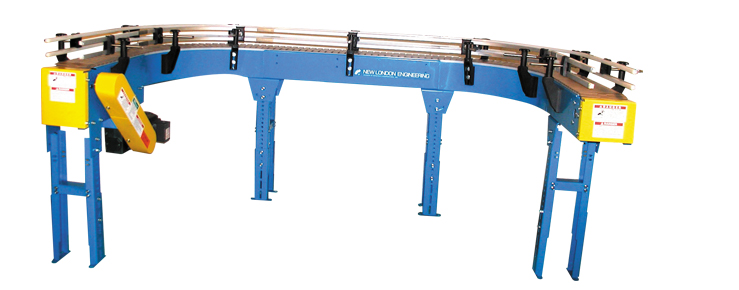
- Model 1000-C – Curved – Right- or left-hand curves for lighter products in bottling, packaging and pharmaceutical plants. 12 ga x 6-11/16" deep frame, frame width = belt width + 1/2", 12 ga formed angle spreaders, 1-3/16" round shafts, 2" x 7/16" hex return rollers, wear strips included. Chains include 881 tab stainless or carbon steel, 882 tab plastic (also with molded high-friction inserts for curved inclines and declines) and LBP 882 for curved accumulation.
- Model 2000-S – Straight Running – General transport in production and packaging operations, and accumulation of products from boxes of candy or laundry detergent to newspapers and magazines. 10 ga x 7-5/8" deep frame, frame width = belt width + 7/8", 10 ga formed channel spreaders, 1-1/2" square shafts, 2-1/2" x 11/16" hex return rollers, straight or chevron wear strips. Belts include Series 900, 1400 and 400 flat top and flush grid, and Series 900, 400 and 1400 roller top for low back-pressure accumulation.
- Model 2000-C – Curved – Right- or left-hand curves in production and packaging operations. 10 ga x 7-5/8" deep frame, frame width = belt width + 7/8", 10 ga formed channel spreaders, 1-1/2" square shafts, 2-1/2" x 11/16" hex return rollers, straight or chevron wear strips. Series 2400 (1" pitch, 1.7 and 2.2 turning radius) and Series 2200 (1.5" pitch, 2.2 turning radius) flush grid belts, with sideguards and friction surfaces available.
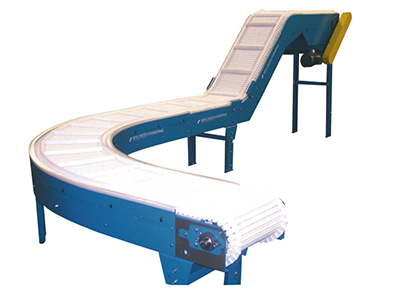
- Model 2000-CF – Curved and Flighted – Curves combined with an elevation change. 10 ga x 7-5/8" deep frame, frame width = belt width + 7/8", 10 ga formed channel spreaders, 1-1/2" square shafts, 2-1/2" x 11/16" hex return rollers, straight or chevron wear strips. Flights up to 1" high fit the standard 7-5/8" frame; frame depth = flight height + 7-5/8" less 1". Series 2400 flights 1" to 3" high, Series 2200 flights 1" to 4" high.
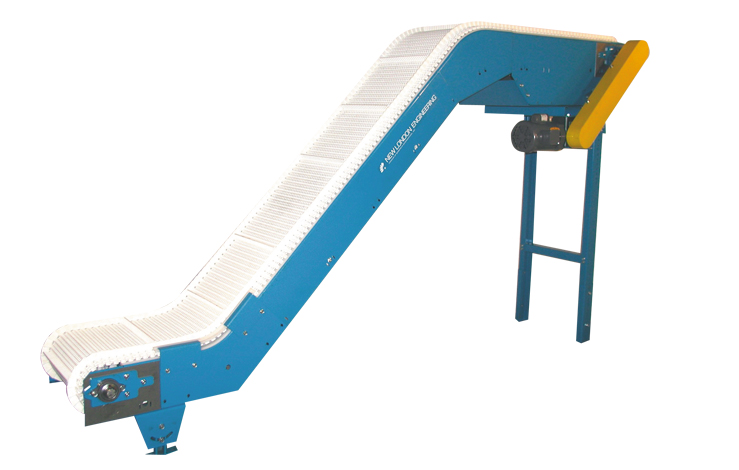
- Model 2000-F – Flighted – Flights (cleats) and sideguards catch, carry and contain small, unboxed, loose products such as plastic parts, nuts, bolts, ammunition casings, cans and stampings. 10 ga x 7-5/8" deep frame, frame width = belt width + 7/8", 10 ga formed channel spreaders, 1-1/2" square shafts, 2-1/2" x 11/16" hex return rollers, straight or chevron wear strips. Series 900 belts with 1", 2" or 3" flights, or Series 400 belts with 1", 2", 3", 4" or 6" flights.
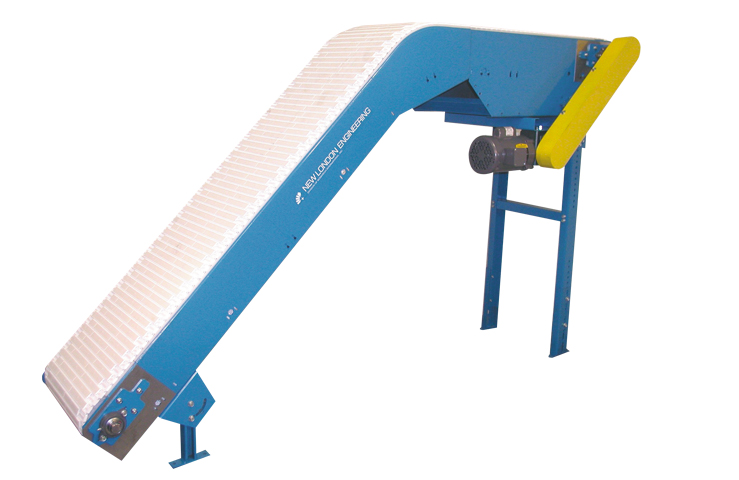
- Model 2000-N – Nose Over – Carries boxes (packaged items) up inclines or down declines on a friction top belt rather than cleats, with a smooth transition from incline to horizontal. Inclines should not exceed 30°. 10 ga x 7-5/8" deep frame, frame width = belt width + 7/8", 10 ga formed channel spreaders, 1-1/2" square shafts, 2-1/2" x 11/16" hex return rollers, straight or chevron wear strips. Series 900 and 1400 flat or square friction top belts.
Applications & Benefits
- Bottling, dairy and pharmaceutical: Model 1000 conveyors carry bottles, cans and other lightweight products.
- Packaging and production: Model 2000 conveyors transport and accumulate boxes, cases and irregular products such as newspapers and magazines.
- Robotic cells: PlastiTrak is often used to move material in and out of automated cells.
- Stampings, fasteners and ammunition: The 2000-F carries nuts, bolts, stampings and ammunition casings up inclines with flights and sideguards.
- Floor to floor: The 2000-N carries boxes up inclines or down declines.
How to Choose the Right PlastiTrak Conveyor
- Start with the product: Model 1000 for lighter products such as bottles and cans, Model 2000 for larger and heavier items such as boxes, cases and parts.
- Pick the path: straight (S), curved (C), flighted incline (F), curve with elevation change (CF) or nose-over incline or decline (N).
- Choose the belt surface: flat top for small products or where tipping is a concern, flush grid for airflow or drainage, roller top for accumulation, friction top for inclines and declines.
- For tight transfers, delicate products or higher speeds, choose a smaller belt pitch, which reduces chordal action.
- For curves, check the minimum inside turning radius: belt width x the belt's rated turning radius (a 24" Series 2200 belt at 2.2 needs 52.8").
- For flighted units, set flight and sideguard heights; flights over 1" increase frame depth.
Why PlastiTrak Conveyors Are Trusted
- Exclusive ACT system: Belts can be exchanged if the application or product changes.
- Heavier Model 2000 frame: The 10 ga, 7-5/8" deep frame handles more daily abuse, and NLE notes less chance of structural damage if a forklift hits it.
- Fewer jams: Sprocket-driven belts will not walk, slip or mistrack, and a plastic belt runs as one continuous surface with no roller dead zones.
Contact & Ordering
Need help picking the right model or getting a quote? Provide these details:
- Product description, dimensions and weight
- Pounds of product on the conveyor at one time (live load)
- Product condition: clean, dirty, wet, dry, oily, sticky, sharp, hot or frozen
- How product is fed: conveyor transfer, drop, manual or robotic arm
- Belt width, speed, and top-of-belt elevation at infeed and discharge
- Voltage, motor side and controls needed
- Contact PRI to discuss specs, lead times, and installation support.