Overview
Wintriss electro-mechanical sensors are simple contact and grounding-style sensors for die protection on coil-fed presses. They wire to a Wintriss die protection control or sensor interface and detect material buckle, end of coil, and part presence or ejection. Wintriss has offered these designs since the 1950s.
Key Features
- Grounding operation
- The sensor is insulated. When the grounded stock or part touches it, it sends a ground signal to the control.
- Wire assembly included
- Each sensor ships with its cable. The buckle, end-of-material and spring probe sensors include a 16 ft, 16 AWG cable.
- Matched to Wintriss input types
- Buckle and end-of-material sensors run as 'yellow' static inputs. Spring probes are typically 'green' cyclic inputs.
- Works with Wintriss controls
- Compatible with the DSI 2 sensor interface, the SmartPAC PRO DiProPAC die protection module and DiPro 1500.
- Adjustable buckle tolerance
- The buckle sensor's arms adjust to set how much buckle is tolerated before a fault.
Product Line / Models
Sensors covered on this page:
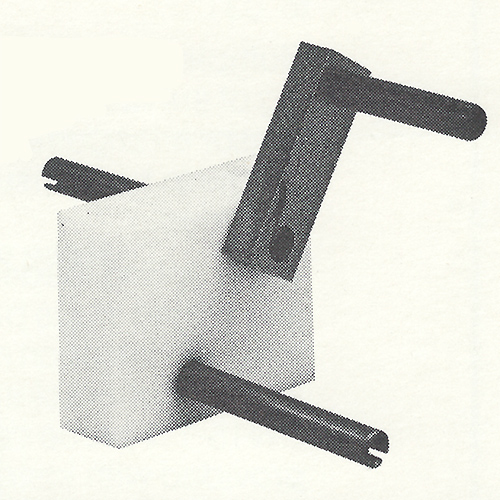
- DMO-2-5-1A Material Buckle Sensor – Mounts between the feed and the die. Faults when the strip buckles and touches either post.
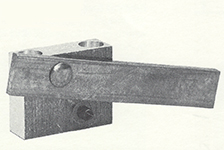
- DF05 End of Material Sensor – The arm rides on the stock and drops when the coil runs out, stopping the press before the tail enters the straightener or feeder.
- DW15-1-3/4 Standard Spring Probe – General-purpose spring probe in an insulated block, with straight and 90° replacement tips.
Applications & Benefits
- Misfeed detection: Catch material buckling between the feed and the die before it damages tooling.
- End of coil: Stop the press before the coil tail pulls through the straightener or feeder, and keep it from running without stock.
- Part in place and ejection: Spring probes verify a part is located or has left the die.
How to Choose the Right Wintriss Electro-Mechanical Sensor
- Start with the malfunction you need to catch: buckle, end of coil, short feed, or part presence or ejection.
- Measure the mounting space for the sensor or probe.
- Confirm your control and sensor interface (SmartPAC PRO, DiPro 1500, DSI 2) and the input type for each sensor.
- Consider lubricants. Wintriss notes that lube can affect direct-contact sensors, so some locations are better served by proximity sensors.
Why Wintriss Electro-Mechanical Sensors Are Trusted
- Proven design: Wintriss electro-mechanical sensors have been protecting dies since the 1950s.
- Simple and dependable: In some applications a simple contact sensor is still the most reliable solution.
- Built for Wintriss controls: Each sensor ships with a wire assembly for a Wintriss die protection control or sensor interface.
Contact & Ordering
Need help picking the right model or getting a quote? Provide these details:
- Die protection control and sensor interface in use
- The malfunction(s) you need to detect
- Material type and thickness, and whether the part is grounded
- Mounting location and available space
- Number and type of sensors needed
- Contact PRI to discuss specs, lead times, and installation support.