Overview
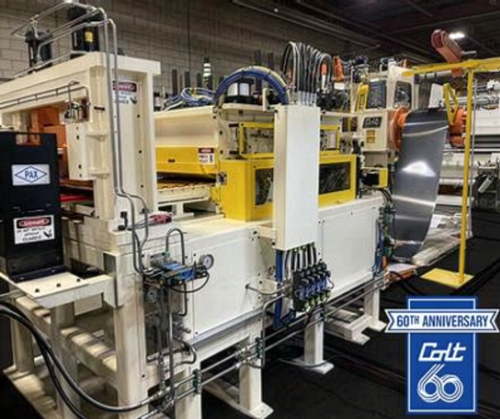
COLT Automation Ltd. has been designing, engineering, and manufacturing heavy-duty coil processing and press feed line equipment since 1965. Their feed line platforms are built for high-speed stamping, blanking, cut-to-length (CTL) coil processing, and other press-fed operations.
A Cut-to-Length (CTL) Feed Line processes coiled sheet metal by:
- Unwinding the coil
- Straightening the material
- Feeding and shearing it to a predetermined length
- Optionally stacking or batching the blanks for downstream use
These systems automate repetitive tasks, reduce manual handling, improve accuracy, and optimize press throughput.
Key Features
- Automated Coil Processing
- PLC-controlled feed line automation with HMI interface
- Recipe-based job setup for repeatable production
- Automated coil centering, threading, and material guide adjustment
- Integrated loop control for consistent tension management
Heavy-Duty Mechanical Design
- Straighteners equipped with 52100 aviation-grade alloy rolls, hardened to RC 60–64
- Rigid frame construction for long service life and minimal deflection
- Industrial-duty uncoilers and coil cars designed for high-weight coils
Precision Feed and Cut Control
- Servo-driven roll feeders for accurate length control
- Integration with mechanical or hydraulic shears
- High repeatability for blank length consistency
- Optional micro-feed and coil-tail handling for optimized blanking
Modular and Scalable Architecture
- Feed line components can operate independently or as a fully integrated CTL system
- Configurable layouts to accommodate floor space, material type, and production volume
- Designed for future expansion or reconfiguration
Typical CTL Feed Line Architecture
Component
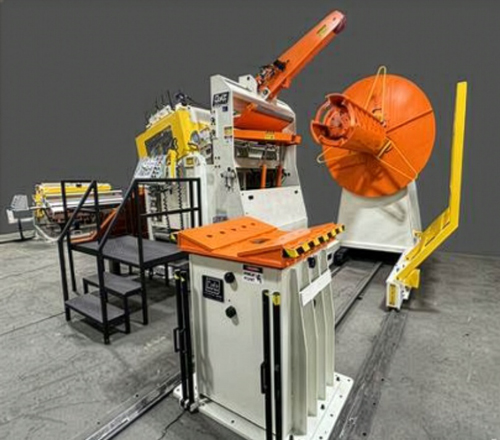
Uncoiler / Reel
Coil Car / Staging
Peeler / Threader
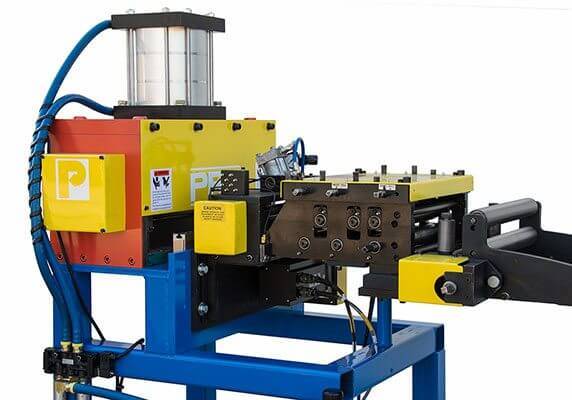
Straightener
Servo Feeder
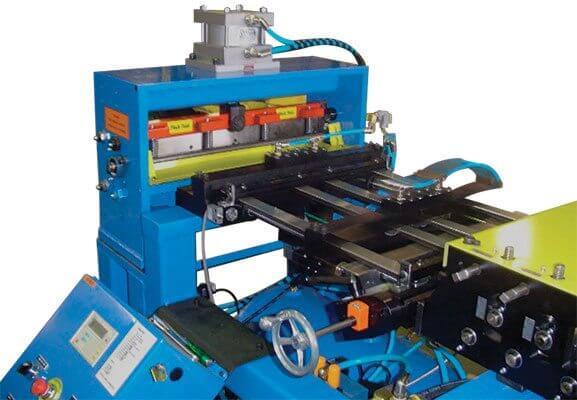
Shear / Cutter
Stacker (Optional)
Performance and Capacity Ranges
Coil Capability
Coil Width: Typical range: 6 in (150 mm) to 84 in (2135 mm)
Coil Weight: Typical range: 1,000 lb (455 kg) to 70,000+ lb (31,750+ kg)
Material Types
- CTL feed lines are designed to process a wide variety of materials, including:
- Carbon steel
- Advanced High-Strength Steel (AHSS)
- Stainless steel
- Aluminum
- Galvanized and coated materials
- Specialty and high-strength alloys
- Material thickness capacity varies based on straightener configuration and application requirements.
Controls and Automation
- Industrial PLC and HMI control platform
- Recipe-driven setup for quick changeovers
- Real-time monitoring of feed length, line speed, and tension
- Diagnostic and fault logging for troubleshooting
- Servo synchronization between feeder, straightener, and shear
Typical CTL Line Configuration Example
A standard COLT CTL feed line may include:
- Powered uncoiler with automatic centering
- Peeler and threading system
- Multi-roll powered straightener (9-roll or higher depending on material)
- Servo roll feeder for precise length control
- Mechanical or hydraulic shear
- Automated stacking or discharge table
- Final configuration is customized based on material thickness, width, coil weight, and production requirements.
Advantages of COLT CTL Feed Lines
- High throughput for blanking and stamping operations
- Reduced setup time through automated threading and adjustments
- Superior straightening performance with hardened alloy rolls
- Modular design allowing customization and future upgrades
- Proven reliability in demanding industrial environments
Applications
- Cut-to-length blank production
- Press-ready blank preparation
- High-speed stamping feed lines
- Roll forming and downstream fabrication
- Automotive, appliance, and heavy industrial manufacturing
Warranty and Support
COLT Automation provides comprehensive product support and warranty coverage (terms vary by system and components). Their long-standing reputation and global installed base reflect a focus on durability, serviceability, and long-term performance.