


Magnetic conveyors use permanent magnets under a stainless slider bed or a belt to hold and carry steel parts, chips and scrap: on the level, up steep inclines and on vertical lifts. Production Resources, Inc. (PRI) supplies beltless and belted magnetic conveyors from MPI and New London Engineering.
Shop Magnetic ConveyorsRequest a QuoteCall (800) 863-3164How They Work · Types · BLM Options · Choosing · What We Need · Videos · FAQs
How Magnetic Conveyors Work
Magnetic conveyors give positive control of ferrous material: metal stampings, turnings, chips, fasteners and scrap. Both kinds can be supplied with feeders, hoppers and other components as a complete material handling system.
Beltless. Powerful permanent magnets ride on a chain inside a sealed housing, below a nonmagnetic stainless steel slider bed. As the chain moves, the magnets pull ferrous parts and scrap along the top of the bed; where the magnets turn back at the discharge, the material drops off. The liquid-tight housing can be completely submerged in a machine reservoir tank, an internal self-adjusting take-up keeps the chain tensioned without maintenance, and with no external moving parts it is a safe way to convey ferrous parts and scrap.

Belted. A permanent or electromagnetic rail under the conveying belt attracts ferrous objects to the belt. The attraction acts as a clamping force, so parts move with the belt and can climb or descend any angle, including vertical. Belts can be fabric, table top or stainless steel mesh, and the conveyors handle high-speed horizontal, incline and vertical runs.
Magnetic conveyors do not move aluminum, brass or other non-ferrous material. For that, see shaker conveyors or hinged steel belt conveyors.
Types of Magnetic Conveyors

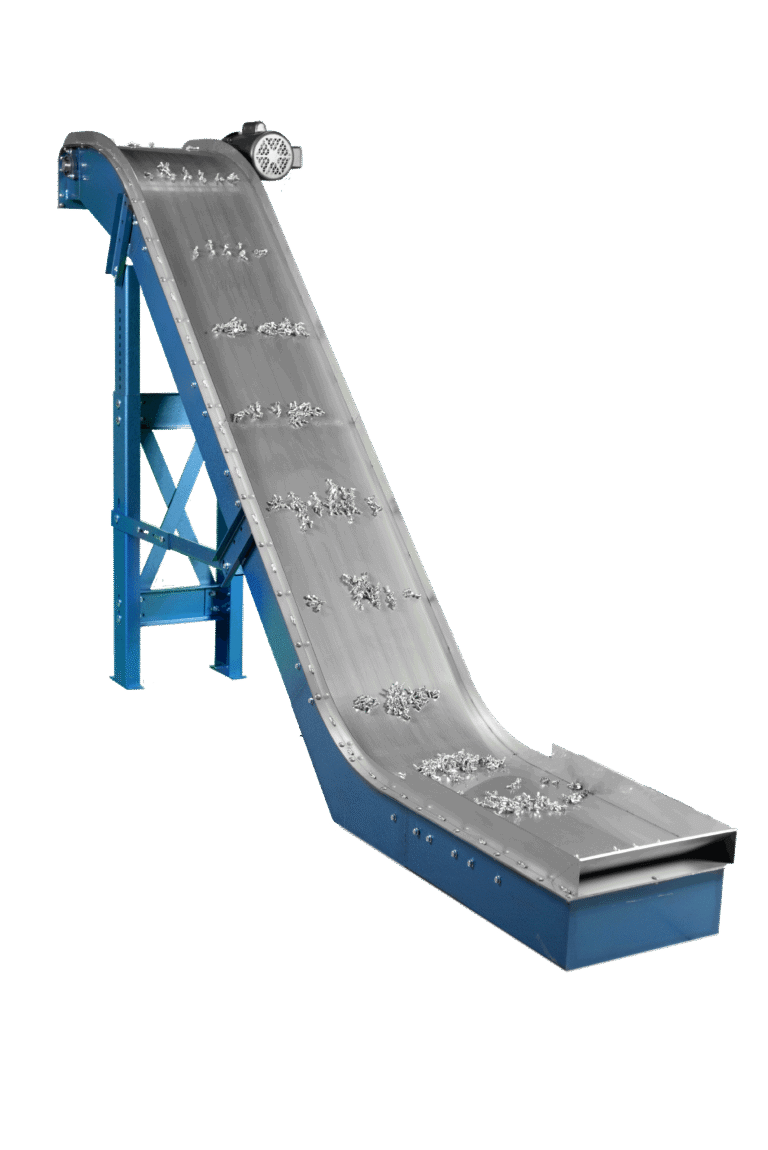
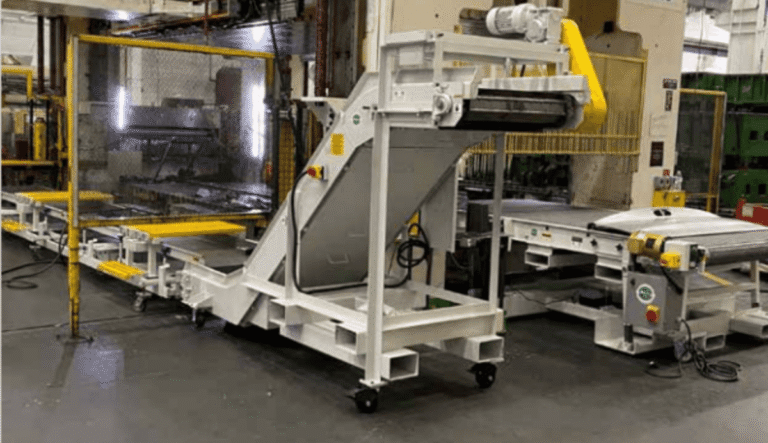
Magnets also show up on other conveyors: PAX center drive and MPI part-out conveyors offer magnetic hold-down under the belt to keep steel parts in place on inclines. See the under-die and part-out conveyor guide.
MPI BLM Series and Options
| Series | Body depth | Minimum slider bed | Magnet centers | Chain | Body |
|---|---|---|---|---|---|
| 600 | 6.5 in. | 6 in. | 5 in. increments | #2052 | 11 gauge |
| 800 | 8.5 in. | 8 in. | 6 in. increments | #2062 | 11 gauge |
| 1200 | 13.875 in. | 12 in. | 8 in. increments | #2082 | 7 gauge |
Each larger series has a deeper body for larger magnet cartridges and a heavier chain for tougher scrap or higher rates; MPI helps select the duty. From MPI's BLM data sheet; confirm current ratings with PRI when you quote.
MPI MBC belted options: standard belt widths 4 to 24 in. (overall width is the belt plus 4 in.), 6 in. standard height or low-profile designs, belt take-up adjustable to 6 in., fixed or variable speed, motorized pulley, direct or chain drive mounted above, below or on either side, legs fixed or adjustable with or without casters, ceramic or rare earth magnets, and feeders and hoppers. MPI's examples include stamped parts holding, vertical can handling transfer and bulk vertical feeding.
How to Choose a Magnetic Conveyor
- 1Confirm the material is ferrousSteel and iron only. Mixed or non-ferrous scrap needs a shaker or hinged steel belt conveyor.
- 2Beltless or beltedBeltless for sharp, oily, hot or abrasive scrap and chips that would cut a belt or make it slip. Belted for parts that need gentle handling, orientation or high speed, including light parts.
- 3Measure the longest pieceMagnet centers are set at about 1.5 times the longest part or scrap piece. Long pieces also favor a continuous-radius discharge.
- 4Set the pathInfeed length and height, incline angle, discharge height and length. Beltless conveyors climb to 90 degrees; belted conveyors handle vertical lifts too.
- 5Size for the rateThe scrap rate picks the BLM series (600, 800 or 1200) and whether rare earth magnets are needed. Testing your material confirms it.
- 6Wet, oily or hotNote whether the conveyor sits in a coolant tank, carries oily parts, or needs a smoke cover for hot parts.
Photos or samples of the parts or scrap help most:
- Parts or scrap, with photos or samples
- Material (must be ferrous); oily, hot or sharp
- Longest, shortest and heaviest piece
- Rate in pounds per hour or parts per minute
- Infeed length and height; discharge height
- Incline angle and shape (straight or dogleg)
- Submerged in a tank, or dry
- Supply voltage and controls
Magnetic Conveyor Brands PRI Offers


Help From PRI
PRI's Application Engineers work with MPI and New London to pick the series, width and magnets for your parts and scrap, and arrange material testing when the rate calls for it. PRI supports installation and startup, trains your team, and helps with parts and repairs. See PRI services.
Magnetic Conveyors in Action
Magnetic Conveyor Downloads
Frequently Asked Questions
How does a beltless magnetic conveyor work?
Permanent magnets ride on a chain inside a sealed housing, below a nonmagnetic stainless steel slider bed. They pull ferrous parts and scrap along the top of the bed and release them at the discharge. There is no belt to wear, track or slip, and no external moving parts.
Can a magnetic conveyor move aluminum?
No. Magnetic conveyors move only ferrous (steel and iron) material. Aluminum, brass and other non-ferrous scrap need a shaker, hinged steel belt or belt conveyor.
Can a magnetic conveyor run submerged in coolant?
Yes. MPI's beltless conveyor has a liquid-tight, sealed housing that can be completely submerged in a machine reservoir tank, with submerged tank designs and extended oil fill options.
How steep can a magnetic conveyor climb?
MPI BLM beltless conveyors are built with inclines of 15 to 90 degrees in 15 degree steps, or custom. Belted magnetic conveyors hold parts on any incline or decline, including vertical.
Ceramic or rare earth magnets?
Ceramic magnets are standard and work for most applications. Testing your material shows whether rare earth magnets are needed to reach the rate.
Beltless or belted?
Beltless for sharp, oily, hot or abrasive scrap and chips. Belted when parts need gentle handling, orientation or high speed.
Related Guides
Conveyor Systems · Under-Die & Part-Out Conveyors · Shaker Conveyors · Hinged Steel Belt, Drag & Slat Conveyors · Belt Conveyors
Send us photos of the parts or scrap, the rate and the path. PRI will recommend the beltless or belted conveyor that fits, and quote it.
Shop Magnetic ConveyorsRequest a QuoteCall (800) 863-3164