Use this form to let us know what part(s) you're looking for and we'll get a quote to you ASAP. To get a quote sooner, call us at 800-863-3164 Monday to Friday during normal business hours.
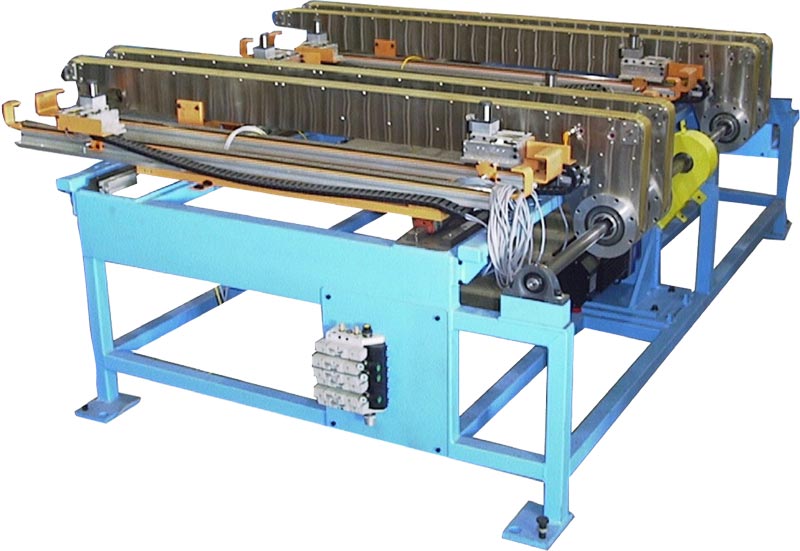
The MPI Magnetic Belt Conveyor, Series MBC, is built by Magnetic Products, Inc. It runs a continuous belt over a permanent-magnet or electromagnetic rail, so steel and iron parts stay clamped to the belt on horizontal runs, steep inclines, and vertical lifts. Production Resources, Inc. (PRI) supplies MBC conveyors to stamping, machining, and metalworking plants that need to move parts, chips, fasteners, stampings, or scrap without losing control of them.
For a full overview of how belted magnetic conveyors work and where they fit in a press room, see our belted magnetic conveyors guide.
Key Features
Two magnet strength levels
You can order standard magnets or high-intensity rare earth magnets to suit the parts being conveyed.
Sealed magnet track
The magnets sit in a sealed track under the belt, which protects them from contamination and reduces maintenance.
Belt styles to match the part
MPI offers fabric, tabletop, and stainless steel mesh belting. Belt materials include rubber, polyurethane, cleated, textured, and oil-resistant.
Cleats and flights
Cleats and flights can be added to help lift parts and keep them oriented on the climb.
Drive that mounts where you need it
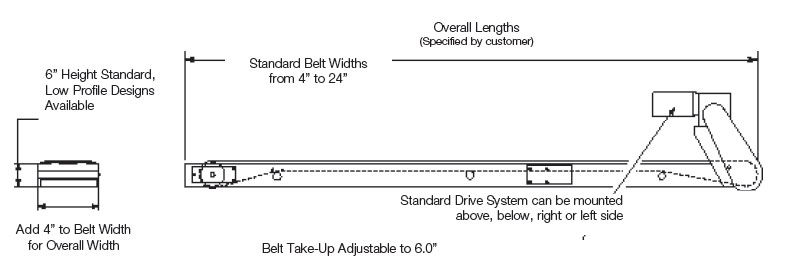
The standard drive can go above, below, or on the right or left side. A motorized pulley or drive unit turns the belt, and a variable frequency drive (VFD) can be added so you can adjust the speed.
Low-profile builds
The standard conveyor is 6″ tall. Low-profile versions are available where headroom is limited.
Product Line / Models
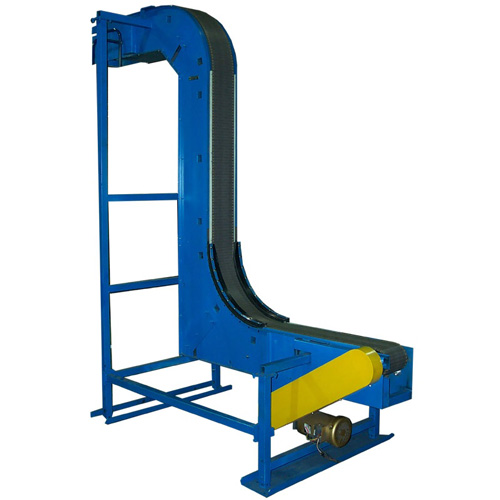
MPI builds each MBC to order. The path can be horizontal, inclined, horizontal-to-vertical, or a Z-frame. MPI's literature shows these configurations:
Stamped parts holding – holds and carries stamped parts
Vertical can handling transfer – moves cans vertically in canning operations
Bulk-vertical feeding – a custom vertical feeding configuration
Switchable magnetic conveyor – a custom switchable-magnet design
Batch processing – an MBC used in a batch processing line
Applications & Benefits
Press lines and CNC cells: Moves ferrous parts, chips, and stampings through high-speed press lines and machining cells.
Steep and vertical lifts: The magnets hold parts to the belt on steep inclines and vertical runs, so parts don't roll back or spill.
Oily or wet parts: Carries oily or slick parts without them sliding or shifting. Drainage options are available for wet parts and washdown areas.
Consistent spacing and orientation: Keeps parts evenly spaced and facing the same way for downstream automation or inspection.
Quiet, simple operation: With few moving parts and a simple drive, the conveyor runs quietly and needs service less often.
Operator protection: The enclosed magnetic circuit keeps operators out of the magnetic field. Optional guards and covers block pinch points.
Technical Specifications
Standard dimensions from MPI's Series MBC data sheet:
Standard belt widths: 4″ to 24″
Overall width: belt width plus 4″
Conveyor height: 6″ standard; low-profile designs available
Belt take-up: adjustable up to 6.0″
Drive mounting: above, below, right side, or left side
Overall length: set by the customer
Installation: floor, table-top, or suspended
How to Choose the Right MPI Magnetic Belt Conveyor
Part profile: Size, weight, and shape, and whether parts are oily, wet, or sharp. This decides the belt material and whether you need standard or rare earth magnets.
Conveyor path: A horizontal run, an incline, a horizontal-to-vertical lift, or a Z-frame, plus the heights at the infeed and discharge.
Width and footprint: Standard belts run 4″ to 24″ wide. Add 4″ to get the overall width when you check floor or machine space.
Height clearance: Go with the standard 6″ height, or a low-profile design if the conveyor has to fit under equipment.
Orientation needs: Add cleats or flights if parts need help climbing or have to arrive facing the same way.
Drive and speed: Choose where the drive mounts and whether you need VFD speed control.
Loading and discharge: Chutes, hoppers, feeders, drainage, and guarding.
Why MPI Magnetic Belt Conveyors Are Trusted
Heavy-duty construction: The frame is built for continuous duty in harsh plants and resists impact, abrasion, and chemical exposure.
Engineered to the application: MPI's in-house engineers and R&D team design equipment around each customer's parts and process, from new builds to retrofits.
Startup support: MPI offers optional installation and startup services, including system testing and commissioning.
Contact & Ordering
Need help picking the right model or getting a quote? Provide these details:
Part or scrap type, size, weight, and condition (oily, wet, sharp)
Required rate or parts per minute
Conveyor path: horizontal length, incline angle or vertical rise, and discharge height
Belt width, overall length, and available space or height clearance
Drive mounting preference, power supply, and speed control needs
Equipment feeding and receiving the conveyor (press, CNC, hopper, bin)
Contact PRI to discuss specs, lead times, and installation support.