Overview
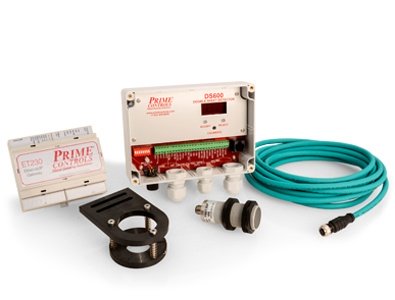
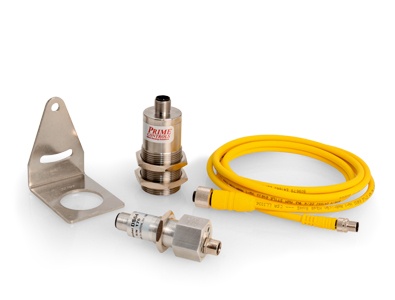
Prime Controls double sheet detectors catch two sheets or blanks fed at once, before the extra thickness damages tools and dies or makes a double-stamped part. Prime offers contact and non-contact systems with one or two probes for steel, tinplate, stainless steel, copper and aluminum, from thin foil to thick steel blanks.
Key Features
- Single- and dual-probe systems
- Single-probe detectors sense the sheet from one side; dual-probe systems measure metal passing between two opposing sensors.
- Contact and non-contact sensing
- Magnetic single probes read ferrous metal touching the sensor face, while inductive and eddy current dual probes never touch the sheet.
- Ferrous and non-ferrous metals
- Probes are tuned for steel and tinplate or for aluminum, copper and stainless steel, so there is a system for each metal group.
- Automatic signal selection
- At power-up, Prime dual-probe detectors test ten signal options and pick the best one for the metal, probe type and probe gap.
- Calibration memory
- Higher-end controls such as the DS1522 and DS600-PC store up to 64 calibrations for different materials.
- Plant network connection
- The DS210 and DS600 connect to EtherNet/IP through Prime's ET210 and ET600 gateways.
Product Line / Models
Prime Controls double sheet detector families:
- DS60 Series – Low-cost single-probe contact system, just 18 mm in diameter, for thin steel and other ferrous metals. Sensors cover .002" to .06" (.050–1.524 mm).
- DS100 Series – Single-probe contact systems for thin steel and ferrous metals.
- DS150 Series – Dual-probe, non-contact systems for all metal types, from the basic DS150 to the DS1522 with over/under thickness detection and 64-slot memory. Sensors cover .002" to .300" (.050–7.5 mm).
- DS160 Series and DS3410 System – Non-contact detectors for thin stainless steel and aluminum (DS160 single-probe, DS3410 dual-probe).
- DS210 System – Single-probe contact detector for steel and tinplate. Pulse-and-release sensing suits pick-and-place and end-of-arm robot transfer. Sensors cover .01" to .25" (.25–6.35 mm).
- DS600 Series – Single-probe, non-contact, non-marring detector for aluminum auto body parts. Range .001" to .15" (.025–3.81 mm).
- DS-FLEX Series – Configurable single- and multi-channel double sheet detection for metal forming.
Applications & Benefits
- Die protection: Catching a double blank before the stroke prevents damage to tools and dies and the downtime that follows.
- Part quality: Keeps double-stamped defective parts from being made and shipped.
- Feeders, destackers and robots: Detectors are used on sheet feeders, destackers, robot loaders and stamping presses.
- Aluminum body panels: The DS600 detects doubles on aluminum from one side without touching the sheet.
- Canmaking and appliances: Prime serves canmaking, automotive, appliance and other metal forming plants.
How to Choose the Right Prime Controls Double Sheet Detector
- Metal type: ferrous (steel, tinplate) or non-ferrous (aluminum, copper, stainless steel).
- Thickness range of a single sheet.
- Whether the sheet can pass between two opposing probes (dual probe) or can only be sensed from one side (single probe).
- Whether the sensor may touch the sheet, or the surface must not be marked.
- Where it mounts: press, sheet feeder, destacker or robot end-of-arm tooling.
- How many materials you run, and whether you need stored calibrations or EtherNet/IP.
Why Prime Controls Double Sheet Detectors Are Trusted
- Automotive track record: Prime Controls double sheet detectors are used by top automakers around the world.
- 25+ years of experience: Prime has focused on double sheet detection for canmaking, automotive, appliance and metal forming for more than 25 years.
- A method for every metal: Inductive, eddy current and magnetic sensing cover ferrous and non-ferrous sheet from foil to heavy blanks.
Contact & Ordering
Need help picking the right model or getting a quote? Provide these details:
- Metal type and grade
- Single-sheet thickness range
- Machine: press, sheet feeder, destacker or robot
- Can the sheet pass between two probes, or only be sensed from one side
- Whether the sensor may contact the sheet
- Output or network needs (discrete I/O, EtherNet/IP)
- Contact PRI to discuss specs, lead times, and installation support.