
Search...

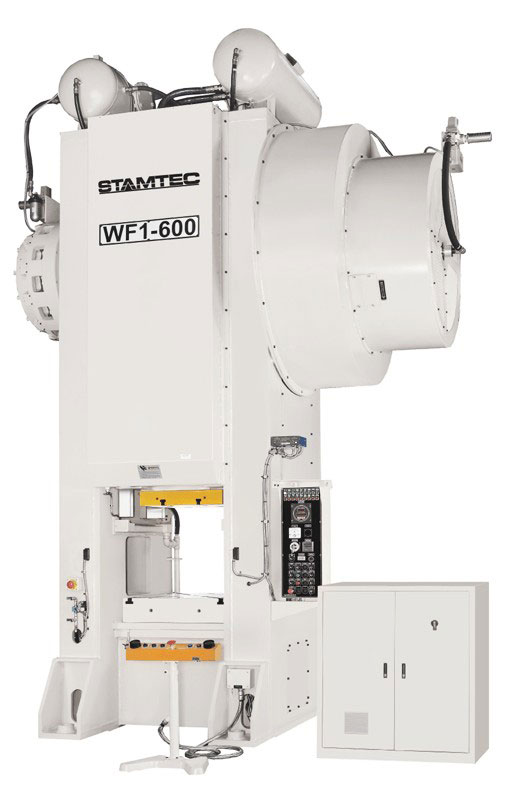
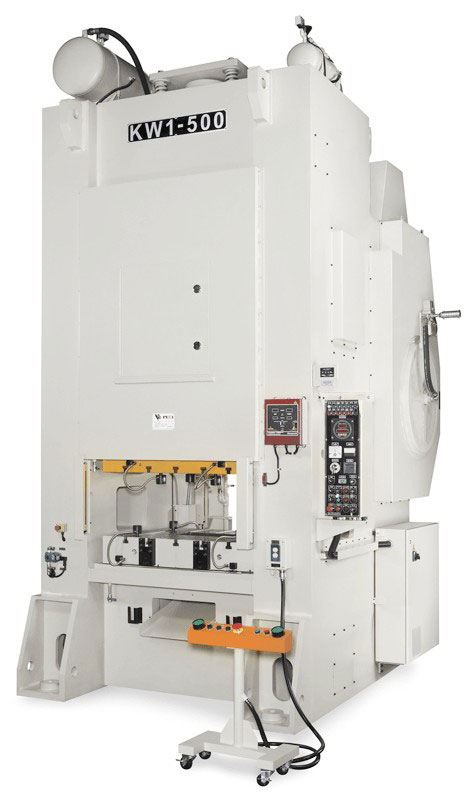
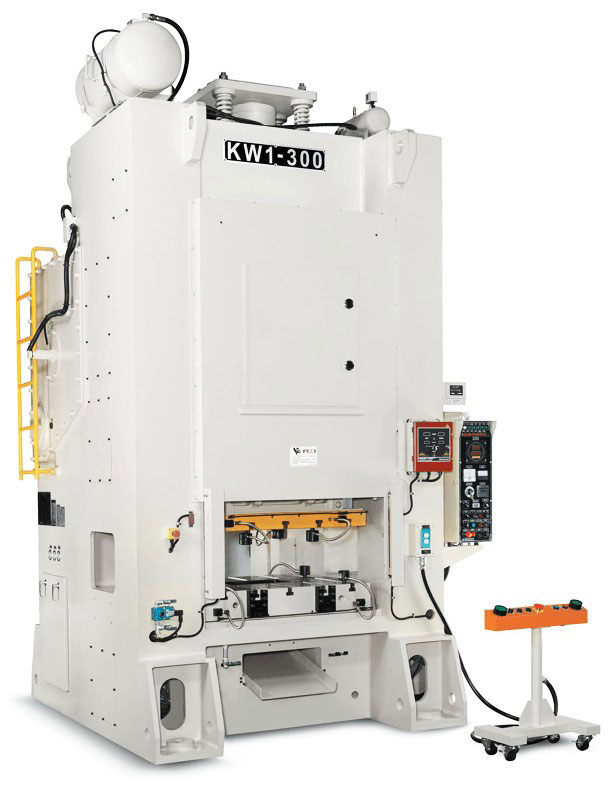
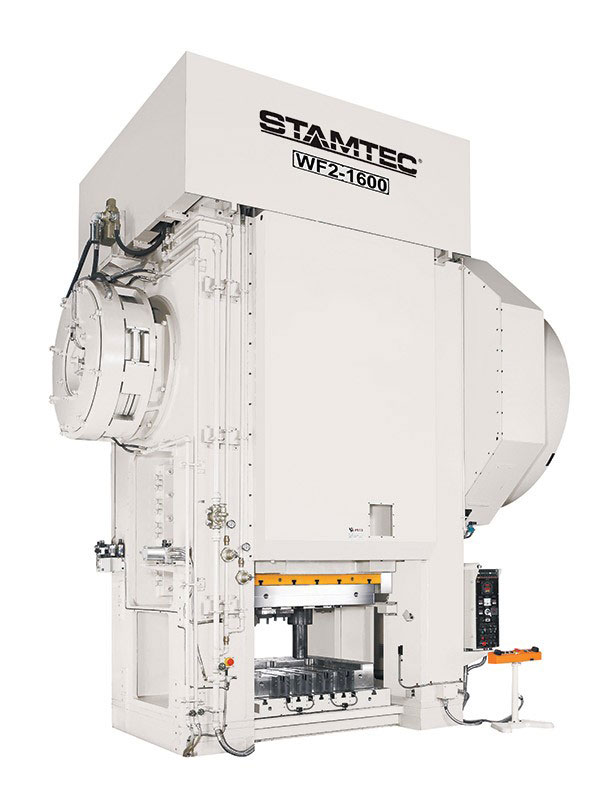
Stamtec’s mechanical forging presses provide the extreme force, rigidity, and durability required for today’s most demanding metal‑forming applications. As one of the few manufacturers offering both cold forging and warm‑hot forging technology, Stamtec delivers proven solutions for producing near‑net‑shape parts with exceptional strength, consistency, and material efficiency.
Production Resources Inc. (PRI) supplies the full line of Stamtec forging presses and supports manufacturers across industries such as automotive, aerospace, industrial hardware, medical, and defense. Whether you’re producing hand tools, gears, shafts, bearing housings, or connecting rods, PRI helps you select and configure the right forging press for your application.
Stamtec offers two primary forging platforms to support a wide range of forming requirements:
Designed for applications requiring maximum part strength and precision. Cold forging strain‑hardens the material at a molecular level, producing extremely strong components with excellent dimensional accuracy.
Ideal for parts that cannot be formed at room temperature. Warm‑hot forging uses softened steel to produce complex shapes, larger components, and parts requiring deeper deformation.
Stamtec forging presses are engineered for high rigidity, long service life, and consistent performance. Their robust frames and tie‑rod construction withstand extreme loads and repetitive high‑force cycles.
Forging presses shape metal through controlled compressive force, producing near‑net‑shape parts that require minimal machining. This reduces cycle time and increases throughput.
Cold and warm‑hot forging can reduce material waste by 40% to 60%, making forging one of the most economical methods for producing high‑precision parts .
Forging presses are ideal for producing components that require exceptional strength, durability, and structural integrity — including automotive shafts, gears, housings, and structural hardware.
Both cold and warm‑hot forging presses feature high‑rigidity frames and tie‑rod construction for maximum durability.
Forging presses apply controlled compressive force to shape metal, improving its internal grain structure and mechanical properties. Unlike stamping, forging produces parts with superior strength and fatigue resistance.
This process enables:
Cold forging hardens the material during forming, while warm‑hot forging softens the steel to allow deeper or more complex deformation.
Feature | Cold Forging Presses | Warm‑Hot Forging Presses |
Material Strength | Produces the strongest parts due to strain hardening | Forms parts that cannot be made cold due to material softness |
Drive System | Knuckle‑joint system slows slide near BDC for precision | Oversized eccentric shafts for rigidity and accuracy |
Part Complexity | Best for simpler, high‑strength components | Ideal for complex shapes and deeper deformation |
Material Savings | 40–60% waste reduction | 40–60% waste reduction |
Typical Applications | Gears, shafts, fasteners, hardware | Automotive shafts, housings, connecting rods |
Stamtec forging presses use knuckle‑joint or oversized eccentric drive systems, depending on the application .
Industrial, automotive, aerospace, hardware, military, appliance, and medical sectors all rely on forging presses for high‑strength components.
Stamtec forging presses are available from 220 to 4,000 tons.
Forging is ideal for producing near‑net‑shape parts, single‑hit finished parts, or components requiring extreme force and rigidity.
Selecting the right forging press requires careful evaluation of:
PRI works with your team to define these requirements and configure the correct Stamtec forging press, including:
PRI ensures the forging press you choose is the right fit for your production environment.
As an authorized distributor of Stamtec forging presses, PRI provides:
Use this form to let us know what part(s) you're looking for and we'll get a quote to you ASAP. To get a quote sooner, call us at 800-863-3164 Monday to Friday during normal business hours.
© 2004-2026
