


A coil reel (stock reel, payoff reel or uncoiler) holds the coil on an expanding arbor and pays the strip out to the straightener or feed. PRI supplies single and double end reels, powered and non-powered, from die-side reels for small coils to heavy uncoilers.
Shop Coil ReelsRequest a QuoteCall (800) 863-3164How They Work · Types · Loop Control · Choosing · What We Need · FAQs
How a Coil Reel Works
Single end coil reels are available in powered and non-powered models. They are intended to pay material off to a straightener or feeding device. The coil is centered and gripped on its inside diameter by centering arms or an expanding arbor (manual or hydraulic expansion), and keeper arms hold it on the reel.
A powered reel turns the coil with a variable speed motor. A loop control speeds it up or slows it down so there is always a free loop of material ahead of the feed. A non-powered reel is used when a straightener or other equipment provides the power to pull material off the coil; a drag brake keeps the coil from overrunning. Rapid-Air 100 Series non-powered reels have adjustable mechanical drag brakes and the 1000 Series uses an air drag brake.
Thicker and higher-strength materials are best handled with a non-powered pull-off reel and a powered straightener, and they need options such as coil hold-down arms and threading equipment for safe handling.
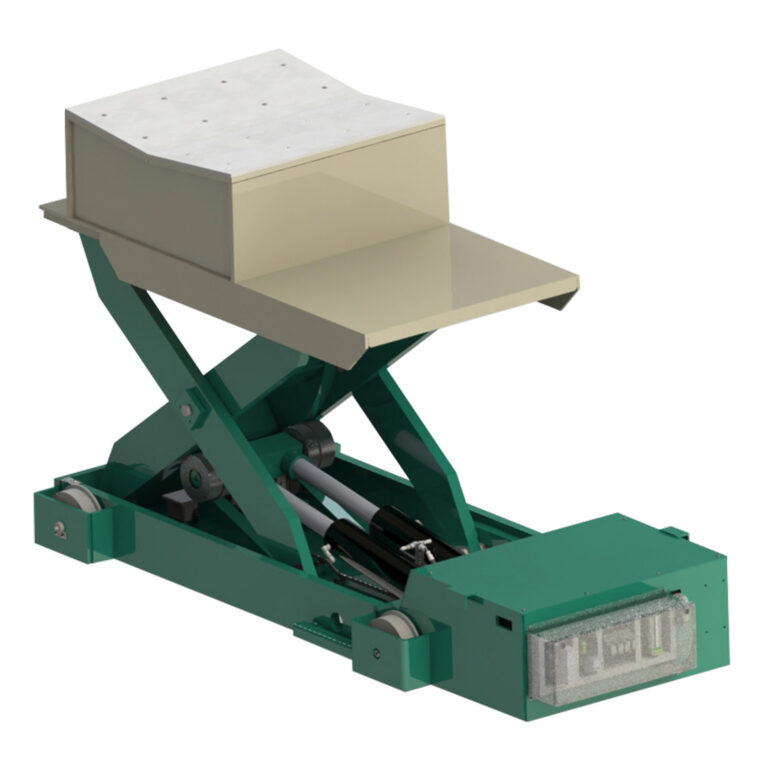
Load cars stage coils for single or double end reels and are intended to shorten coil change times. Double end reels do the same job: load a new coil on one side while the other pays off, then swivel the reel 180°. Either one needs more floor space. See the Coil Handling & Feeding guide for where the reel sits in the line.
Reel Types
Pick a card for the product page or guide.


Loop Control: Matching the Reel to the Feed
A feed indexes in bursts; a reel runs best at a steady speed. The free loop between them absorbs the difference, and the loop control keeps it in range by speeding up, slowing or stopping the reel.
How to Choose a Coil Reel
- 1Coil weight and ODThese set the reel series. Rapid-Air sizes its reels by maximum coil weight, coil OD, material width and coil ID range; check your heaviest, largest coil.
- 2Coil ID and widthThe arbor has to expand across your coil ID range, and the keeper arms or backing plates have to fit your widest coil.
- 3Powered or non-poweredPowered with a loop control when the feed pulls from a free loop. Non-powered with a powered straightener for thicker, higher-strength material.
- 4Payout speedThe reel’s rated line speed has to exceed the average speed of the feed (feed length times strokes per minute).
- 5Coil change timeWork out the footage in a coil and how long it lasts at your feed length and press rate. If coil changes come too often, a double end reel or a coil car to stage the next coil keeps the press running.
- 6Material carePre-finished, plated or pre-stamped stock, wire, paper or plastic may call for a hydraulic reel, a non-contact loop control or interleaf handling.
- 7Floor space and loadingDouble end reels and load cars need room; reel/straightener combos save it. Plan how coils arrive: crane, coil car or upender.
Our Application Engineers need these to help you select a reel, straightener and feeder combination:
- Material type and thickness
- Coil width, minimum and maximum
- Coil ID and OD
- Maximum coil weight
- Payout speed, or feed length and strokes per minute
- What pulls the strip (feed or straightener)
- Payout direction (over or under; which side)
- Floor space and coil change frequency
- How coils are loaded (crane, coil car, upender)
- Rewind or interleaf needs
Coil Reel Brands PRI Offers


Also through PRI: Coiltek ultrasonic loop controls and Caldwell coil hooks, lifters and upenders. See Additional Manufacturers.
Help From PRI
PRI’s Application Engineers can help you select a reel, straightener and feeder combination that best fits your needs, from the coil weights and widths to the loop and the floor space. PRI supports installation, startup and training, offers parts for Rapid-Air coil handling equipment, and can arrange foundations and coil loop pits through Delta Industrial (Additional Manufacturers). PRI also offers OSHA/ANSI safeguarding surveys and stop-time measurement for the presses your coil line feeds. See PRI services.
Coil Reel Downloads
Frequently Asked Questions
Should I use a powered or non-powered coil reel?
Use a powered reel with a loop control when the feed pulls from a free loop. Use a non-powered reel when a powered straightener pulls the material off the coil; thicker and higher-strength materials are best handled this way.
When do I need a double end reel?
When coil changes stop the press too often. A double end (dual swivel) reel lets you load the next coil while the current one runs, then swivel it into place. A coil car that stages the next coil does the same job. Both need more floor space.
What does a loop control do?
It keeps a free loop of material between the reel and the feed by starting, stopping or changing the speed of the reel. Options include loop sensing arms, ultrasonic non-contact controls and touch controls.
Can a reel handle delicate or pre-finished material?
Yes, with the right reel and controls. Rapid-Air hydraulic reels are built for delicate materials and rewind work, and non-contact loop controls sense the loop without touching the strip.
How heavy a coil can PRI handle?
Rapid-Air reels run to 6,000 lb, PRE payout reels to 50,000 lb, and Stamtec uncoilers to 33.07 US tons. For heavy-gauge coil, PRE cradles are another option.
Related Guides
Coil Handling & Feeding (overview) · Air Feeds · Servo Feeds · Straighteners · Pallet Decoilers · Cut-to-Length · Quick Die Change
Send us your coil weight, ID, OD and width and how fast the line runs. PRI will recommend the reel and quote it.
Shop Coil ReelsRequest a QuoteCall (800) 863-3164