

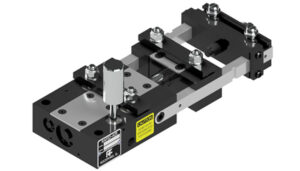
An air feed uses shop air to grip coil or strip stock and advance it into the die a set distance every press stroke. It is the simplest, most economical way to feed a press, and many air feeds mount right on the die or bolster.
Shop Air FeedsRequest a QuoteCall (800) 863-3164How They Work · Types · Rapid-Air Models · Options · Choosing · What We Need · FAQs
How an Air Feed Works
Air feed equipment is a cost-effective way to feed and process coil. Each press stroke trips the feed’s valve. A feed clamp grips the material and a slide block carries it forward to a stop; a stock clamp then holds the strip while the feed clamp returns for the next stroke. The stroke, and so the feed length, is set mechanically: with an adjustable rear stop on Rapid-Air feeds, or a front-mounted crank with a digital readout on PRE feeds.
Clamp timing is what keeps the stock from marring or buckling. Rapid-Air’s dual air valve system uses one valve for the feed and stock clamps and another for the slide block, so the material is always clamped before the slide block moves. PRE cushions the feed block at each end of the stroke with hydraulic shock absorbers for accuracy and long wear.
Air feeds handle more than flat metal strip. Rapid-Air feeds run paper, plastic, wire, fabrics, foil, tubing, round stock and extruded or preformed shapes, at short or long progressions and different production speeds.
An air feed should pull from a free loop of material supplied by a powered reel or a powered straightener, so it is not dragging the coil itself. For how the feed fits into the rest of the line, see the Coil Handling & Feeding guide; for the payoff, see coil reels and straighteners.
Air Feed Types
PRI offers air feeds from Rapid-Air and Press Room Equipment (PRE). Pick a card for the product page in the catalog.
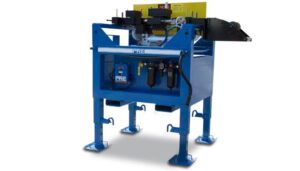
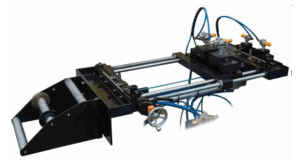
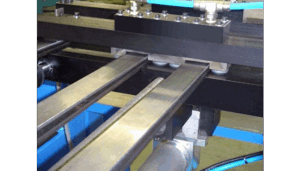
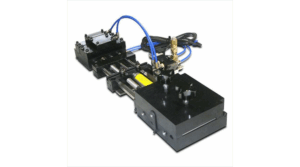
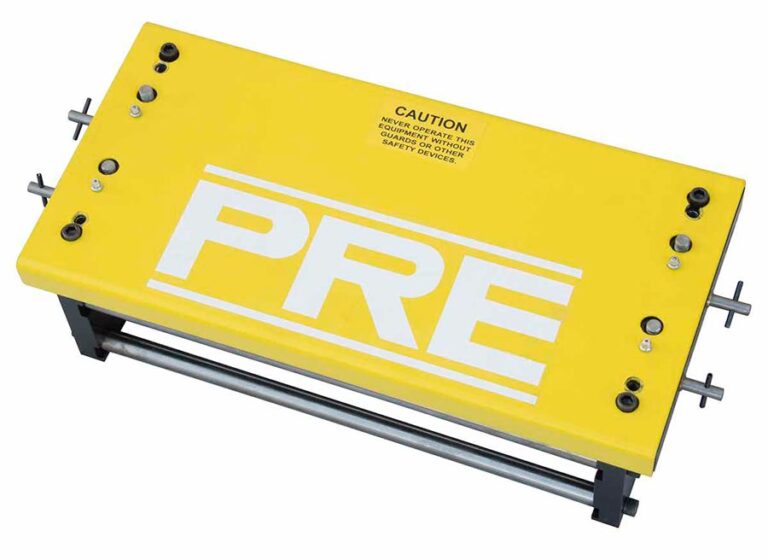
Rapid-Air Air Feed Models
Use the table to find the smallest feed that covers your widest stock, thickest stock and longest stroke.
| Model | Max width | Max stroke | Stock thickness | Speed (cycles/min) | Pulling capacity |
|---|---|---|---|---|---|
| A2 / A4 / A6 | 1-1/2" | 2" / 4" / 6" | .002–.040" | 260 / 200 / 160 | 20 lb |
| B2 / B4 | 2-1/2" | 2" / 4" | .002–.040" / .002–.035" | 230 / 175 | 20 lb |
| C3 / C6 / C12 | 3" | 3" / 6" / 12" | .003–.075" / .003–.062" / .003–.062" | 195 / 140 / 85 | 45 lb |
| D3 / D6 | 4" | 3" / 6" | .003–.075" / .003–.062" | 175 / 135 | 45 lb |
| W6 / W12 / W20 | 2" | 6" / 12" / 20" | .003–.090" / .003–.062" / .003–.050" | 140 / 85 / 50 | 100 lb |
| F4 / F6 / F12 / F20 | 6" | 4" / 6" / 12" / 20" | .004–.075" (F4, F6) / .004–.050" / .004–.035" | 160 / 130 / 70 / 35 | 100 lb |
| H4 / H8 | 8" | 4" / 8" | .004–.075" / .004–.062" | 160 / 105 | 100 lb |
| FX6 / FX12 | 6" | 6" / 12" | .005–.150" | 105 / 60 | 145 lb |
| L6 / L12 | 12" | 6" / 12" | .005–.090" | 105 / 60 | 145 lb |
| P6 / P12 | 16" | 6" / 12" | .005–.075" / .005–.062" | 105 / 60 | 145 lb |
| LX12 | 12" | 12" | .005–.125" | 50 | 250 lb |
From Rapid-Air’s published air feed table and 2023 catalog. Speed is approximate at maximum stroke; heavy stock needs slower speeds. Pulling capacity is at 100 psi, allowing for normal friction. Thinner material, or long strokes with thin material, is possible with anti-buckling guides, and maximum thickness rises by the same percentage as width drops (up to 150%). An electric actuating valve (add “E” to the model) is recommended for strokes over 8". Confirm current ratings with PRI when you quote.
Options That Fit the Feed to the Job
How to Choose an Air Feed
- 1Widest and thickest stockCheck both against the feed’s rating. On Rapid-Air feeds, narrower stock can be thicker (up to 150% of the rating). PRE gripper feeds take material up to 3/8" thick and double gripper feeds up to 48" wide.
- 2Longest feed lengthThe longest progression sets the stroke: 2" to 20" on Rapid-Air feeds, standard to 48" on PRE single and double gripper feeds.
- 3Speed at that strokeAir feed speeds are rated at maximum stroke and drop with heavier stock. If the press has to run faster at a long feed, compare a servo feed.
- 4Pulling capacityThe feed pulls the strip from the loop and through any pull-through straightener. Rapid-Air ratings run from 20 lb to 250 lb at 100 psi.
- 5Pilots and timingIf the die uses pilots, specify pilot release. Decide how the press will tell the feed to move: an actuating valve tripped by the ram, or an electric signal from the press control.
- 6Material and finishFor thin, flexible or pre-finished material, look at double or bridge gripper feeds, anti-buckling guides, custom clamp inserts or the belt feed.
- 7Air feed or servo feedFrequent job changes, long feeds, or tight accuracy at speed point to a servo feed. See the servo feed guide.
Send what you have:
- Material type and thickness range
- Strip width (minimum and maximum)
- Feed lengths (progressions)
- Strokes per minute
- Press make, model and passline
- Mounting: die, bolster or cabinet
- Pilots and pilot release
- Air pressure at the press
- How the coil pays off today (reel, straightener)
- Finish concerns (marking)
Air Feed Brands PRI Offers


Help From PRI
PRI’s Application Engineers help you size the feed to your stock, stroke and press speed, and plan the reel or straightener that keeps a free loop ahead of it. PRI offers rebuild kits and complete parts for Rapid-Air feeds and coil handling equipment (download the parts list below), and supports installation, startup and operator training. When frequent tool changes make an air feed the bottleneck, PRI can replace it with a servo feed. PRI also offers OSHA/ANSI safeguarding surveys and stop-time measurement for the presses your coil line feeds. See PRI services.
Air Feed Downloads
Frequently Asked Questions
What is an air feed?
An air-operated press feed. On each press stroke it grips the coil or strip stock, advances it a set distance into the die, and holds it while the feed returns. Air feeds are a simple, cost-effective way to feed light to medium stock.
How do I set the feed length on an air feed?
Mechanically. On a Rapid-Air feed the rear stop is adjusted to set the stroke. PRE air feeds use a front-mounted crank with a digital readout, so no tools are needed.
How wide and thick can an air feed go?
Rapid-Air standard air feeds take stock up to 16" wide and up to .150" thick (FX models at 6" wide), with strokes to 20". PRE single gripper feeds handle material up to 3/8" thick with standard strokes to 48", and PRE double gripper feeds run 24" to 48" wide.
What is pilot release, and do I need it?
If the die has pilots that locate the strip, the feed must release the strip as the pilots enter so they can shift it into position. Rapid-Air offers a pilot release stock clamp and PRE air feeds include a pilot release circuit.
Should I use an air feed or a servo feed?
Air feeds are economical for lighter stock and shorter, fixed feed lengths. A servo feed sets the feed length at the control, changes it in seconds and covers longer feeds and heavier stock. PRI can also replace a worn air feed with a servo feed.
Can PRI supply parts for my Rapid-Air feed?
Yes. PRI offers rebuild kits and complete parts for Rapid-Air feeds and coil handling equipment. The Rapid-Air air feed parts list is in the downloads above.
Related Guides
Coil Handling & Feeding (overview) · Servo Feeds · Coil Reels · Straighteners · Pallet Decoilers · Cut-to-Length · Quick Die Change
Send us your stock width and thickness, feed length and press speed. PRI will recommend the feed and quote it.
Shop Air FeedsRequest a QuoteCall (800) 863-3164