


Quick die change (QDC) is the equipment and the method that take press changeovers from hours to minutes: racks and carts to stage and move the die, lifters and bolster extensions to roll it into place, and clamps to lock it down. PRI helps you plan the system and supplies every piece of it.
Shop QDC ProductsRequest a QuoteCall (800) 863-3164What QDC Is · The Equipment · Planning a System · What We Need · Brands · FAQs
What Is Quick Die Change?
Quick die change is essential to just-in-time (JIT) manufacturing. A properly designed quick die change system, including die handling equipment like carts and storage racks, lets you change tools safely in minutes instead of hours.
The method behind it is SMED, single-minute exchange of die, developed by Shigeo Shingo in the 1950s and 1960s. The goal is a changeover in single-digit minutes, under 10. The key step is separating internal setup, which can only be done with the press stopped (like inserting the new die), from external setup, which can be done while the press runs (like bringing the new die to the press), then moving as much of the work as possible to external.
Shorter changeovers make short runs practical. You can run smaller lots, carry less finished inventory, free up press time that used to go to setup, and change dies with fewer people and less heavy lifting.
The Equipment in a QDC System
Each piece handles one step of the change: storing and staging the next die, moving it to the press, rolling it onto the bolster, locating it and clamping it. Pick a card to read the guide for that equipment, or go straight to the catalog.


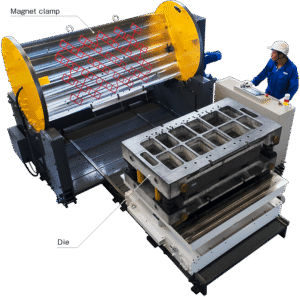
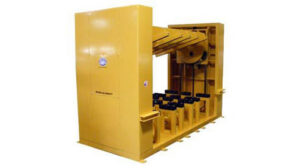
PRI also supplies press automation controls that shorten the rest of the changeover: automatic shut height and counterbalance adjustment (Wintriss RamPAC with SmartPAC PRO), automatic feed setup, and setup of all press control parameters and auxiliary timing for each job. See SmartPAC PRO press automation.
How to Plan a Quick Die Change System
- 1Time the changeover you have todayWalk through a die change and time each step. Separate the work that has to happen with the press stopped (internal) from the work that can be done while it runs (external).
- 2Move setup work outside the stopStage the next die, its clamps and tools at the press before the last part of the run. Racks near the line and a die cart or table make this possible.
- 3Standardize the diesCommon die heights, clamping edge thickness and sub-plates or parallels let every die locate and clamp the same way, which is what makes the rest of the equipment work.
- 4Choose how dies moveDie carts for regular changes between presses, bolster extensions with a forklift when a cart isn't practical, or die tables for staging at the press. Die weight, press count and floor space decide it.
- 5Choose lifters for the bolsterSpring lifters need no power and suit small to mid-sized dies; hydraulic lifters lift heavier dies with a cylinder in the rail. See the die lifter guide.
- 6Choose the clampsHydraulic cylinder or lever clamps that slide in the T-slots, automatic slide clamps, or traveling clamps that move to the die on their own and save walking on large presses. Clamp sensors can interlock the change so it can't continue until every clamp is in position.
- 7Automate the press settingsRecalling shut height, counterbalance and feed settings by job removes the last manual adjustments from the change.
Send what you have. A bolster drawing and a list of your dies go a long way:
- Press make, model and tonnage
- Bolster and ram drawings with T-slot or U-slot sizes and locations
- Die weights (lightest and heaviest) and footprints
- Die heights, shut height range and clamping edge thickness
- Bolster height from the floor and space in front of and behind the press
- Number of presses, dies and changes per shift
- Sub-plates or parallels in use today
- Hydraulic, air and electrical supply at the press
QDC Brands PRI Offers


Help From PRI
PRI Application Engineers help you configure and justify a QDC system that fits your presses and your dies. Our die handling and storage experience comes from the quick die change background of our vice president, Chris Jones, and the team will help you select die handling equipment, die storage and die clamping, and get it working.
QDC Downloads
Frequently Asked Questions
What is a quick die change system?
A quick die change (QDC) system is the die handling, die storage and die clamping equipment, plus the method, used to change dies in a press. A properly designed QDC system lets you change tools safely in minutes instead of hours.
What does SMED mean?
SMED stands for single-minute exchange of die, the changeover method developed by Shigeo Shingo. The goal is a changeover in single-digit minutes (under 10), reached by separating work that needs the press stopped from work that can be done while it runs.
What equipment is part of a quick die change system?
Die storage racks, die carts or die tables, bolster extensions or pre-rollers, die lifters and die clamps, and often die rotators and die splitters for maintenance. PRI supplies Green Valley die handling equipment and Pascal lifters, clamps and rotators.
Do I need die carts, or will bolster extensions work?
Bolster extensions and pre-rollers fit when die carts aren't available or affordable: the die is staged at the front or back of the press with a forklift, then pushed into the die space over the lifters. This works best with a smooth sub-plate under the lower die. Die carts are dedicated to the change and remove the wait for a forklift.
Can PRI help configure a quick die change system?
Yes. PRI Application Engineers help configure and justify QDC systems, and the team helps select die handling equipment, die storage and die clamping, and get it working.
Related Guides
Die Carts · Die Storage Racks · Die Lifters · Bolster Extensions · Die Clamps · Die & Mold Splitters · Quick Mold Change (injection molding)
Send us your press and die information. PRI will recommend the carts, lifters and clamps that fit, and quote the system.
Shop QDC ProductsRequest a QuoteCall (800) 863-3164