

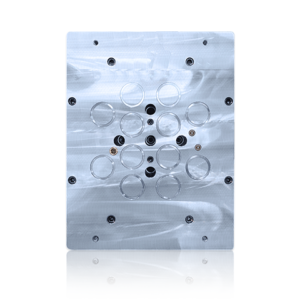
Quick mold change (QMC) takes an injection molding machine from one mold to the next in minutes instead of hours: clamps that lock the mold at a button instead of bolts, mold changers instead of a crane, couplers that connect every line at once, and locating devices that set the mold in the same place every time. PRI supplies Pascal’s QMC line and helps you plan it.
Shop Quick Mold ChangeRequest a QuoteCall (800) 863-3164What QMC Is · The Equipment · Clamps Compared · Changing & Connecting · Planning · What We Need · Videos · FAQs
What Is Quick Mold Change?
Every mold change is time the machine isn’t running. In a conventional change, operators walk around the machine to unbolt the clamps, disconnect the water, oil, air and electrical lines one hose at a time, remove the ejector rod, lift the mold out with a crane, then do it all in reverse for the next mold and center and level it by hand. Quick mold change equipment removes or shortens each of those steps.
The method is the same one stampers use for quick die change: do as much as possible while the machine is still running, and make what’s left fast and repeatable. The quick die change guide explains that method (SMED) and covers the equipment for stamping presses. This guide covers injection molding machines.
Production Resources, Inc. (PRI) doesn’t sell the molding machine itself. We supply the equipment around it, starting with Pascal’s quick mold change line, and help molders shorten mold changes, set molds accurately and handle heavy molds safely.
The Equipment in a QMC System
Each piece removes one step from the change. Pick a card to shop that category.
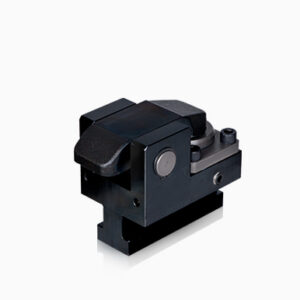

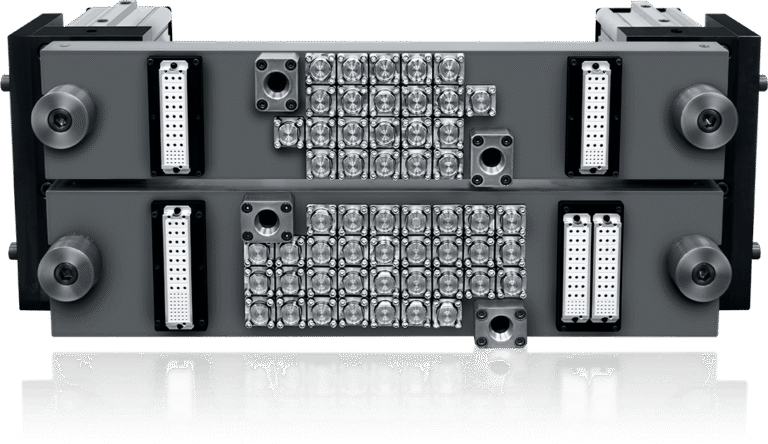
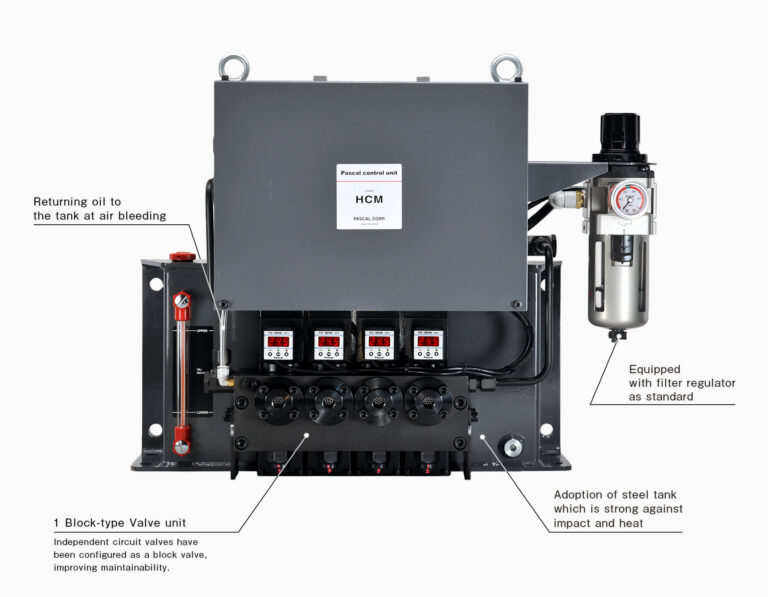
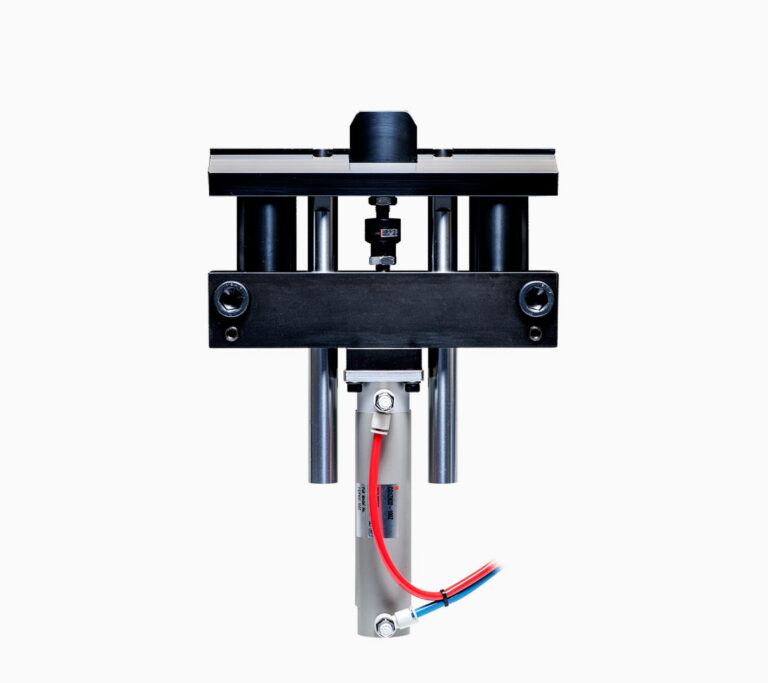


Magnetic vs. Hydraulic and Air Mold Clamps
The clamping method is the first decision, because it sets how molds must be built and what else the system needs.
| Magnetic clamp | Hydraulic or air clamps | |
|---|---|---|
| How it holds | Neodymium and alnico permanent magnets in plates on both platens | Clamps on the platen press on the mold’s clamping plate |
| Clamp / unclamp | At a button, 0.5 to 4.5 seconds | From the control; slidable clamps are positioned by hand, automatic slidable clamps move on their own |
| Power | Only to switch on or off (the coil is energized for 0.5 s). No power and no heat while clamped; stays clamped through a power outage | Run from a Pascal hydraulic or air control system |
| Mold sizes | No need to standardize mold width, height or thickness; add a spacer where needed for horizontal loading | Clamping plate thickness must be within the clamp’s range. Long-stroke TYB takes 5 mm of variation (15 mm with a lever spacer); TYJ takes up to 10 mm |
| Platen space | Uses the whole platen; nothing in the way of core cylinders, connectors, couplers or hoses | Needs mounting space on the platen around the mold |
| Monitoring | Coils near the center of the plate detect if the mold shifts or lifts | Mold detection switches on the clamps |
| Heat | Circle core MFA/MRA: 50 mm plate, 120°C. Square core MGA: 35 or 50 mm plate, 150 or 180°C | Per clamp model |
From Pascal’s magnetic clamp and hydraulic/air clamp pages and catalogs. Confirm ratings with PRI when you quote.
Changing, Connecting and Locating the Mold
How to Plan a Quick Mold Change System
- 1Time the change you have todayWalk through a mold change and time each step: clamps, lines, ejector rod, crane, centering and leveling, restart. The longest steps are where the equipment pays back first.
- 2Do the math on machine timeSaving 15 minutes on each of 4 mold changes a day adds up to about 22 hours of machine time a month over 22 working days.
- 3Choose the clamping methodMagnetic clamps if molds vary in size, platen space is tight or molds run hot; hydraulic or air clamps if mold clamping plates are, or can be made, uniform.
- 4Decide how molds get in and outA crane, or a mold changer that loads from the side. Mold weight, floor space beside the machine and whether you want the next mold staged decide the type.
- 5Connect every line at onceCount the water, hydraulic, air and electrical lines on your molds. Multi couplers group them by hand; auto couplers connect them as the mold is set.
- 6Locate the same way every timeUse locate rings, die setters or levelers so the mold lands in position and robots don’t need re-teaching, and quick-change ejector rods.
- 7Plan the mold shopStore, move, open and flip molds safely with mold racks, mold carts, mold splitters and a mold rotator.
Send what you have. Platen drawings and a mold list go a long way:
- Machine make, model and clamp force (kN or tons)
- Horizontal or vertical; standard, two-color or rotary
- Platen drawings: size, tie-bar spacing, T-slots or tapped holes, locate ring size
- Mold sizes and weights, smallest and largest
- Mold temperature at the clamping plates
- Clamping plate thickness and how much it varies
- Lines on each mold: water, hydraulic cores, air, hot runner and electrical, thermocouples
- Ejector rod size and stroke
- Mold changes per week and how molds move today
- Floor space beside the machine, and any robot
- Shop air and electrical supply
See Quick Mold Change Work
350-ton mold change with magnetic clamping (Pascal)
3,000-ton machine: mold changer with magnetic clamp (Pascal)
Battery-powered QMB mold changer (Pascal)
Easy ejector rod change on a 100-ton machine (Pascal)
Quick Mold Change Brands PRI Offers


Help From PRI
Tell us your machine tonnage, platen size, mold sizes and weights, and how often you change molds. PRI’s application engineers match clamps, changers, couplers and controls to your machines and molds with Pascal, support installation and startup, and train your setup people, with the same changeover experience PRI brings to quick die change on stamping presses. See PRI services.
Frequently Asked Questions
What is quick mold change (QMC) equipment?
Equipment that shortens mold changes on an injection molding machine. It clamps the mold without bolts, rolls molds in and out without a crane, connects the mold’s water, oil, air and electrical lines in one move, and locates the mold in the same position every time.
Does PRI sell injection molding machines?
No. PRI supplies the equipment around the machine, starting with Pascal’s quick mold change line, and supports installation.
Should I choose magnetic or hydraulic mold clamps?
Magnetic clamps use the whole platen, don’t need standardized molds and use power only to switch on and off. Hydraulic and air clamps suit molds whose clamping plates are uniform, or can be made uniform, but they need room on the platen. Mold temperature, mold variety and platen space usually decide it.
What happens to a magnetic mold clamp if the power goes out?
The mold stays clamped. Pascal mag clamps use permanent magnets and need power only to switch on or off, so a power outage or broken power cable doesn’t release the mold.
Do my molds have to be the same size?
Not with a magnetic clamp: Pascal mag clamps don’t require standardized mold sizes, and a spacer handles height differences for horizontal loading. Hydraulic and air clamps need clamping plates within the clamp’s stroke range.
Can quick mold change be added to an existing machine?
Usually. Clamps mount to the platens you have, and changers and couplers are laid out around the machine and your molds. Send PRI your platen drawings and mold list and we’ll check the fit with Pascal.
Is quick mold change the same as quick die change?
It is the same idea applied to injection molding machines instead of stamping presses. For press dies, see the quick die change guide.
Related Guides
Quick Die Change (stamping) · Die Clamps (stamping) · Die & Mold Carts · Die & Mold Storage Racks · Die & Mold Splitters
Send us your machine, platen and mold information. PRI will recommend the clamps, changers and couplers that fit, and quote the system.
Shop Quick Mold ChangeRequest a QuoteCall (800) 863-3164