


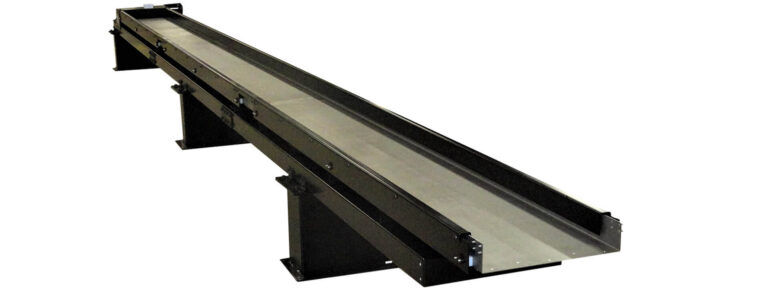
Shaker conveyors, also called oscillating conveyors, move scrap and parts along a pan or tray with a slow forward stroke and a quick return. With no belt or chain in the material path, they clear slugs and trim from under the die and carry scrap across the plant. Production Resources, Inc. (PRI) supplies electric shakers from MPI and PAX.
Shop Shaker ConveyorsRequest a QuoteCall (800) 863-3164How They Work · Types · Models at a Glance · Features · Choosing · What We Need · FAQs
How Shaker Conveyors Work
Shaker conveyor systems transport material in a controlled, horizontal motion. They suit bulk materials, parts transfer and scrap removal, and with few wear parts they are durable and low-maintenance. Besides metal stamping, they are used in food processing, general manufacturing and recycling.
The drive moves the pan forward slowly and pulls it back quickly. Material rides forward with the pan, then slides as the pan returns, so it steps along toward the discharge. MPI's drives use this slow, low-frequency stroke with a quick return. PAX's patented elliptical gear drive (EGD) runs elliptical gears in a sealed oil bath, which gives a high conveying speed at low RPM. Shakers are often called vibratory conveyors, but these low-frequency drives work differently from high-frequency vibratory feeders.
Both brands are electric. An air-driven shaker costs compressed air and air-seal upkeep; an electric shaker uses neither, and MPI rates its electric shakers at up to 71% lower operating cost than pneumatic designs. Because nothing in the material path is magnetic, a shaker moves steel, aluminum and other non-ferrous scrap alike.
Types of Shaker Conveyors


Shaker Models at a Glance
| Model | Mounting | Crossbar or tray | Capacity | Drive |
|---|---|---|---|---|
| MPI M-10 | Press, bolster T-slot | 18 in. crossbar | 10 lb of pans and scrap | Electric, 110 VAC |
| MPI M-50 | Press, bolster T-slots | 36 in. crossbar | 50 lb of pans and scrap | Electric, 110 VAC |
| MPI M-200 rack & pinion | Press, bolster T-slots; optional cart | Crossbars to 180 in. (15 ft); two systems for wider presses | 200 lb of pans and scrap, even with lopsided pan loads | Electric, 110 VAC |
| MPI M-10000 | Floor or pit | 24 or 36 in. pans; up to 250 ft long (24 in.) or 200 ft (36 in.) | Over 10,000 lb per hour | Single drive; up to 15 fpm |
| PAX EGD-50 | T-slot or custom brackets, or a stand | 1 to 5 ft crossbar | 50 lb of trays plus 100 lb of parts and scrap | 1/6 hp; push-button on/off; drive 16.5 x 6.7 x 15.6 in., 50 lb |
| PAX EGD-125 | T-slot or custom brackets, or a rolling floor stand | 2 to 10 ft | 125 lb of trays plus 250 lb | 3/8 hp; external control; 9.4 x 20 x 15 in., 95 lb |
| PAX EGD-250-48 | T-slot or custom brackets, or a stand | 4 to 12 ft | 250 lb of trays plus 500 lb | 3/4 hp; 11.6 x 49 x 17.5 in., 440 lb |
| PAX EGD-250-72 | T-slot or custom brackets, or a stand | 6 to 16 ft | 250 lb of trays plus 500 lb | 3/4 hp; 12 x 72 x 18 in., 700 lb |
| PAX EGDF-125 / EGDF-250 | On or below the floor | Trays to 16 in. (125) or 12 to 48 in. (250); 40 ft on one drive with an 18 in. tray; multi-drive systems to 200 ft | 250 lb / 500 lb of parts and scrap | 3/8 hp, 120 VAC (125); 3/4 hp 3-phase with VFD (250) |
MPI's M-10, M-50 and M-200 convey at about 20 fpm. PAX EGD crossbars come in 6 in. steps, standard input is 120 VAC single phase (other voltages available), and parts move up to 25 fpm depending on the part and how clean the tray is. From MPI's and PAX's published data; confirm current ratings with PRI when you quote.
Features Worth Knowing
How to Choose a Shaker Conveyor
- 1Press-mounted or floor-mountedPress-mounted shakers clear the die, with pans between the die uprights. Floor-mounted shakers collect from one or more presses and carry scrap to a central point.
- 2Measure the crossbarCrossbar length follows the bolster and the dies: MPI M-10 (18 in.), M-50 (36 in.) or M-200 (to 180 in.), or PAX EGD from 1 ft to 16 ft.
- 3Add up the weightRatings include the pans or trays. Add the pan weight to the scrap that sits on them at one time, and leave margin.
- 4Lay out the pansSeveral pans can hang from one crossbar. If the load will be lopsided, choose the M-200 rack and pinion; the M-10 and M-50 want a balanced load.
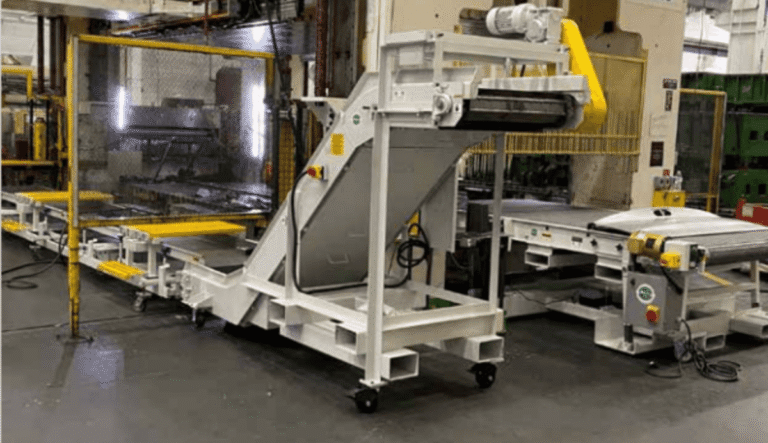
- 5Plan the run and the dischargeFor long runs, use a floor shaker (PAX EGDF or MPI M-10000) or several units in tandem. The end usually feeds a hopper, a dumpster or an incline conveyor that lifts scrap into one.
- 6Controls and die protectionOn/off at the unit, a switch at the press, or start and stop with the press. PAX's tray motion sensor can tie into die protection so the press stops if the tray stops.
A photo of the die area and the scrap answers most of these:
- Press make, model and bolster size
- Distance between the die uprights or parallels
- Crossbar length and where the drive can mount
- Scrap type, size and pounds per hour
- Number and size of pans or trays
- Run length to the discharge point
- Press, floor or pit mounting
- Supply voltage and how it starts and stops
Shaker Brands PRI Offers


Help From PRI
PRI's Application Engineers size the shaker to your press and dies, lay out the pans or trays, and plan how scrap leaves the press, including what it feeds downstream. PRI supports installation and startup, trains operators and setup people on pan changes, and helps with parts and repairs. MPI also offers 24/7 support and a repair program for its shakers. See PRI services.
See It Run
Shaker Downloads
Frequently Asked Questions
What is a shaker conveyor?
A conveyor that moves material along a pan or tray with a slow forward stroke and a quick return, so the material steps forward each cycle. Shaker conveyors are also called oscillating or vibratory conveyors. In press rooms they clear slugs and scrap from under the die and carry scrap to a central point.
Should I choose an electric or an air-driven shaker?
PRI's shaker lines are electric. An electric shaker uses no compressed air and has no air seals to maintain; MPI rates its electric designs at up to 71% lower operating cost than pneumatic shakers.
Can a shaker conveyor move aluminum scrap?
Yes. Nothing in the material path is magnetic, so shakers move aluminum, brass and other non-ferrous scrap as well as steel.
How fast does a shaker conveyor move scrap?
MPI's press-mounted shakers convey at about 20 feet per minute, and the MPI M-10000 floor shaker up to 15 fpm. PAX EGD conveyors move parts up to 25 fpm, depending on the part and how clean the tray is.
How do I mount a shaker on my press?
MPI's M-10, M-50 and M-200 slide into the bolster T-slots and lock with a bolt; the crossbar sits level with the bolster so the pans rest on it. PAX EGD units mount on PAX T-slot or custom brackets, or on a stand. Send PRI your bolster drawing and we'll check the fit.
Do shaker conveyors need much maintenance?
Very little. MPI's electric shakers need no air or lubrication, PAX's gears run in a sealed oil bath, and the MPI M-10000 rides on grease-free rubber suspension bearings. MPI's guide in the downloads covers the four most common causes of shaker failures.
Related Guides
Conveyor Systems · Under-Die & Part-Out Conveyors · Magnetic Conveyors · Hinged Steel Belt, Drag & Slat Conveyors · Belt Conveyors · Scrap Choppers & Stock Cutters
Send us your press, die layout and scrap. PRI will recommend the shaker, pans and mounting that fit, and quote it.
Shop Shaker ConveyorsRequest a QuoteCall (800) 863-3164