

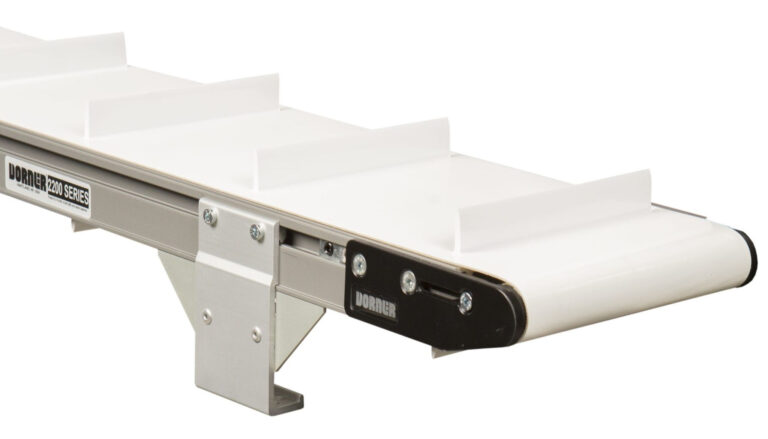
Belt conveyors move parts and products between machines, workstations and packaging: miniature and low-profile conveyors that fit inside machines, heavy-duty slider beds, cleated inclines, curves and timing-belt conveyors for indexing, plus the modular belt, roller and pallet conveyors around them. Production Resources, Inc. (PRI) supplies Dorner, New London Engineering and PAX.
Shop Belt ConveyorsRequest a QuoteCall (800) 863-3164What They Do · Types · At a Glance · Modular, Roller & Pallet · Choosing · What We Need · Brands · FAQs
What Belt Conveyors Do
Industrial automation conveyors move parts and products through each stage of production. Conveyors built for automation control the product closely, delivering items to exact locations at exact times, in consumer goods, metalworking, product assembly, warehousing and e-commerce.
A belt runs over a slider bed or rollers between a drive pulley and an idler. Flat belts handle transfers, accumulation and positioning; cleated belts carry loose parts up inclines; timing belts index parts to an exact position; V-guided belts track straight under side loads.
PRI's Application Engineers work on materials handling conveyor applications including automated assembly, power press parts handling, scrap removal, food handling and pharmaceutical handling. PRI offers low-profile flat and cleated belt, straight, curved and modular plastic belt conveyors from Dorner, and slider bed, cleated incline and wire mesh conveyors from New London Engineering.
Types of Belt Conveyors


Belt Conveyor Platforms at a Glance
| Platform | Best for | Widths | Lengths | Load / speed |
|---|---|---|---|---|
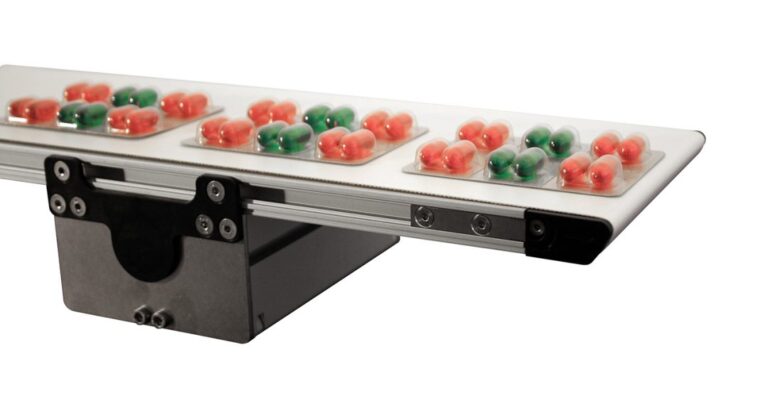
| Dorner 1100 | Small, light parts; inside machines; Class 100 clean rooms | 1.75 to 10 in. | 10.63 to 72 in. | 15 lb / 80 fpm |
| Dorner 2200 | Small part transfers, accumulation, infeed and outfeed | 1.75 to 24 in. | 1.5 to 24 ft | 120 lb / 400 fpm |
| Dorner 2200 Low Profile Z-frame | Low infeed to a higher discharge (fixed 5, 10, 15 or 20°) | 1.75 to 24 in. | 24 in. to 18 ft | 80 lb / 250 fpm |
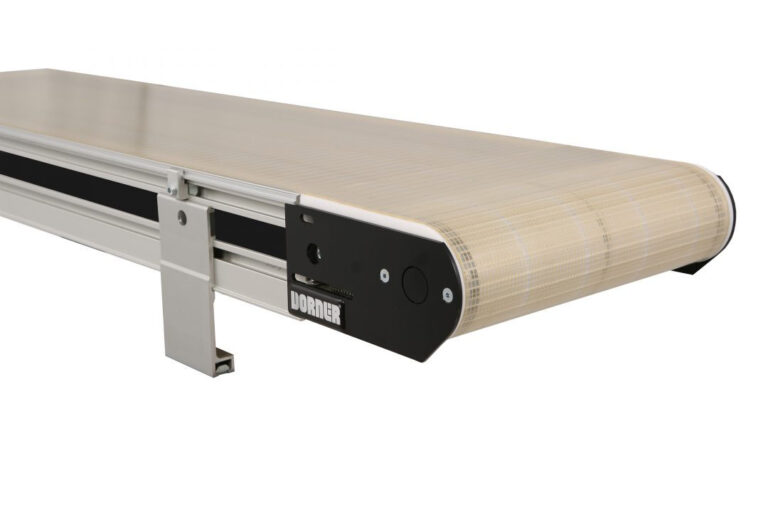
| Dorner 2200 Precision Move | Indexing and part placement (±0.02 in.) | 1 to 24 in. | 18 in. to 30 ft | 200 lb / 370 fpm |
| Dorner 2700 Medium Duty | Medium loads; AGV and AMR-mounted conveyors | 8 to 36 in. | 20 in. to 24 ft | 150 lb / 400 fpm |
| Dorner 3200 | Heavy parts, high speeds, long runs | Up to 48 in. | Up to 99 ft, by drive | 1,000 lb / 600 fpm |
| Dorner 3200 Precision Move | Heavy indexing | 4 to 18 in. | 2 to 50 ft | 750 lb / 517 fpm |
| Dorner DCMove | Packages and logistics; painted steel frame | 10 to 48 in. | 38 in. to 40 ft | 400 lb / 600 fpm |
| New London ToughTrak 150 / 250 | Low-profile steel slider bed for press rooms and metalworking | 2 to 24 in. | 2 to 10 ft / 2 to 20.5 ft | Up to 432 / 660 lb by width; 15 to 120 / 15 to 90 fpm |
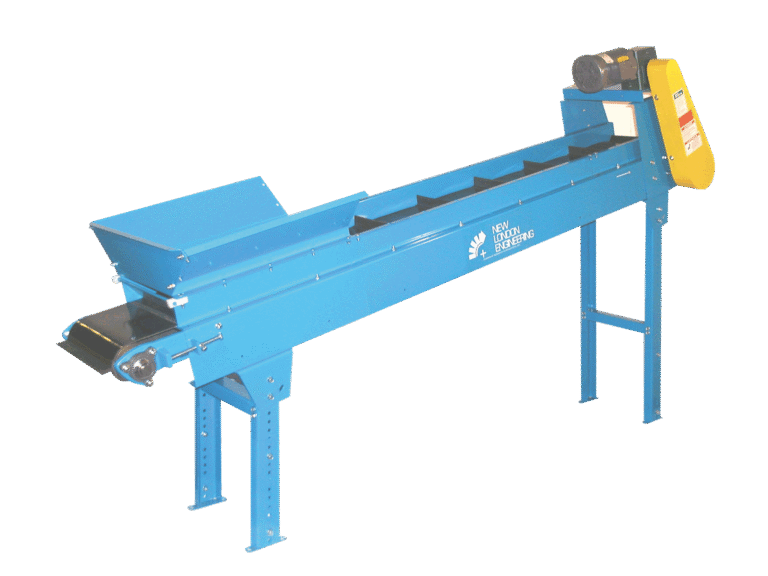
| New London slider bed (200 to 321, 640) | Boxes, parts, paper and small pallets | Up to 30 to 68 in. by model | 5 to 100 ft | Per application |
| New London incline (500, 505, 506, 351) | Loose parts and stampings up an incline (to 75°) | 4 to 48 in. | Up to 25 ft | Per application |
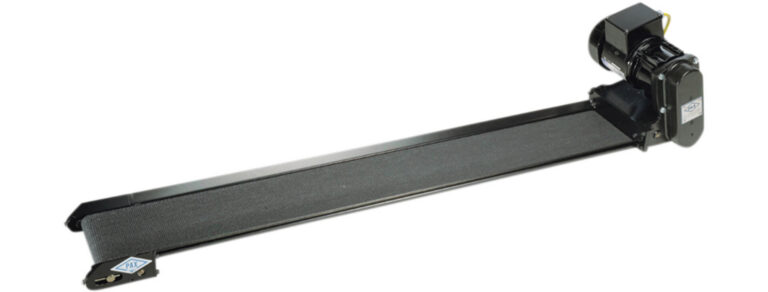
| PAX low profile / center drive | On the bolster, under the die (see the under-die guide) | 4 to 20 in. nominal | 24 to 120 in. | 27 to 103 fpm (low profile) |
From Dorner, New London Engineering and PAX published data. Ratings vary by drive and configuration; confirm current ratings with PRI when you quote. Full specifications for each platform are on its catalog product page.
Modular Belt, Plastic Chain, Roller & Pallet Conveyors
How to Choose a Belt Conveyor
- 1Part size and weightWeight per foot, footprint, and whether parts are sharp, oily or hot. Hot, sharp or heavy scrap belongs on a hinged steel belt or magnetic conveyor instead.
- 2Duty and frameAluminum frames (Dorner 1100 to 3200) for assembly, automation and clean areas; painted steel and steel slider beds (Dorner DCMove, New London) for industrial loads and packages.
- 3PathStraight, Z-frame or cleated incline, curves, floor-to-floor, or a FlexMove line that curves and climbs in one conveyor.
- 4Speed, indexing and accumulationFixed or variable speed, reversing, indexing with a timing belt, or accumulation without back pressure on roller top belts, ARB or pallet systems.
- 5Space and driveHeight, width and length available, including under-die clearance at the press, and room for the drive: end, center or a motor inside the conveyor (Dorner iDrive, DCMove).
- 6ControlsPlug-and-play variable speed controls, ties to the press or line control, sensors and stops.
A layout sketch with the part answers most of these:
- Part or product size, weight and material
- Rate: parts per minute or loads per hour
- Conveyor width and length, or a layout sketch
- Path: straight, incline angle, curves or elevation change
- Infeed and discharge heights
- Speed, and whether it indexes, reverses or accumulates
- Environment: oil, washdown, clean room or heat
- Supply voltage and controls
Belt Conveyor Brands PRI Offers


Also through PRI: Titan heavy-duty belted and roller conveyors. See Additional Manufacturers.
Help From PRI
PRI's Application Engineers match the platform to your parts, rate and layout, from a single transfer conveyor to a line with curves, inclines and pallet stations. PRI supports installation and startup, trains your operators and maintenance staff, and helps with belts, parts and repairs. See PRI services.
Belt Conveyor Downloads
Frequently Asked Questions
What is a low-profile belt conveyor?
A belt conveyor with a very shallow frame that fits inside or under machines. Dorner's 1100 Series has a 3/4 in. frame height and the 2200 Series is a compact low-profile platform; New London's ToughTrak has a 1-3/4 in. deep steel frame. For conveyors that sit on the bolster under a die, see the under-die and part-out guide.
What is the difference between a flat belt and a cleated belt conveyor?
A flat belt moves parts on the level or a gentle slope and handles transfers, accumulation and positioning. A cleated belt has raised cleats that keep loose parts from sliding back, so it carries them up steeper inclines.
Can one belt conveyor run curves and inclines?
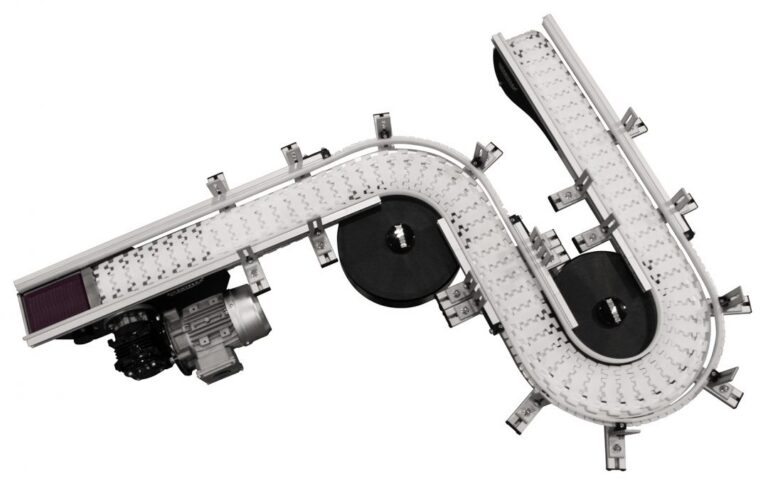
Yes. Dorner's 3200 modular belt runs up to four curves on one conveyor, FlexMove flexible chain curves, climbs and descends in one line, and Z-frame conveyors go from a low infeed to a higher discharge. New London cleated incline conveyors climb to 75 degrees.
Which conveyor indexes parts to an exact position?
A timing-belt conveyor such as Dorner Precision Move. The 2200 version has ±0.02 in. mechanical accuracy, and both sizes can run with a servo motor for indexing.
Are Dorner conveyors used in clean rooms?
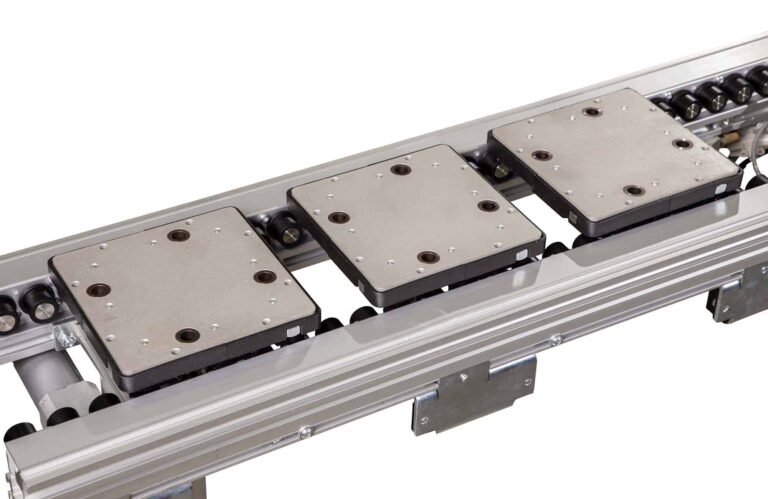
Yes. Dorner rates the 1100 Series as Class 100 certified for medical and pharmaceutical clean rooms, and its ERT pallet conveyors as ISO Class 4 verified on an unloaded base conveyor; Dorner recommends testing the actual application.
Dorner Application Notes and Articles
Accumulation Conveyors · FlexMove Conveyors · Vacuum Conveyors · Retractable Conveyors · Dorner Pallet Conveyor Systems · Benefits of Dorner ERT Conveyors · What Is an Automated Conveyor System?
Related Guides
Conveyor Systems · Under-Die & Part-Out Conveyors · Shaker Conveyors · Magnetic Conveyors · Hinged Steel Belt, Drag & Slat Conveyors
Send us the part, the rate and a sketch of the layout. PRI will recommend the conveyor that fits, and quote it.
Shop Belt ConveyorsRequest a QuoteCall (800) 863-3164