


A power press is the machine every stamping line is built around. PRI supplies Stamtec mechanical, servo and forging presses from 22 to 4,400 tons and Eagle mechanical, servo and hydraulic presses, helps you size the press to the die and the part, and equips it with the feeds, controls, die change, safety and automation the line needs.
Shop Power PressesRequest a QuoteCall (800) 863-3164How Presses Work · Press Types · Hydraulic Presses · Ranges · Choosing a Press · What We Need · Around the Press · Brands · FAQs
How a Mechanical Power Press Works
A mechanical press stores energy in a flywheel. When the clutch engages, the flywheel drives a crankshaft or eccentric gear that moves the slide down and back up once per stroke, and the brake stops it at the top. The force is highest near the bottom of the stroke: a press is rated at its full tonnage only at a set distance above bottom dead center, called the rated tonnage point. Stamtec’s GHS high-speed presses, for example, are rated 0.039" (1 mm) above bottom.
Presses are built in two basic frames. A gap frame (C-frame) press is open on three sides, so dies and material are easy to reach. A straight side press has columns at both ends and resists deflection better under heavy and off-center loads. The drive decides how the slide moves: a crank or eccentric drive gives the classic stroke, link motion slows the slide while it forms the part, and a servo drive lets you program the motion. Forging presses are built for the much higher forces of cold, warm and hot forging. A hydraulic press drives the slide with hydraulic cylinders instead of a flywheel and crank.
Production Resources, Inc. (PRI) offers mechanical, link motion, servo and forging presses from Stamtec, mechanical, servo and hydraulic presses from Eagle, and the complete system around them. New to press terms like shut height, stroke and SPM? Bookmark our post on Press Terminology.
Press Types
Pick a card to go to that type in the catalog. Tonnages are US tons from Stamtec’s published series pages.
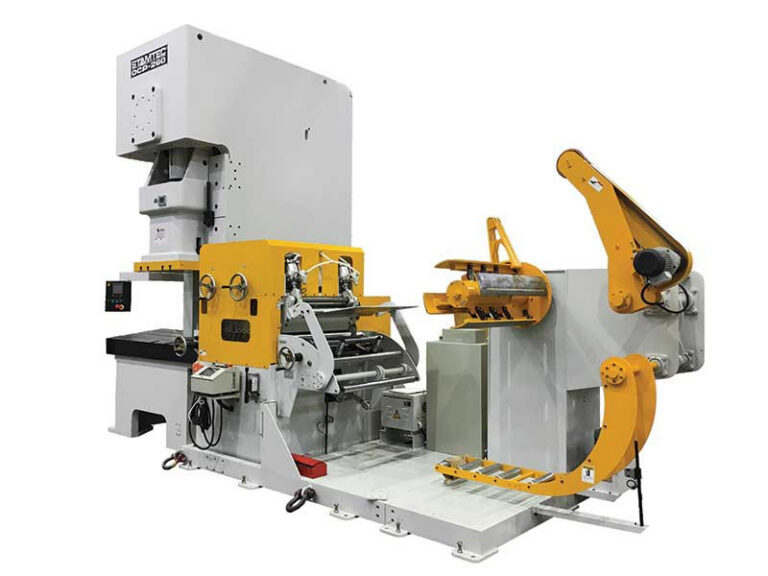
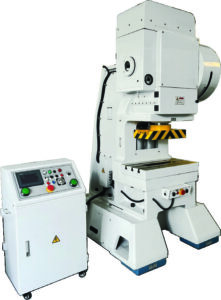


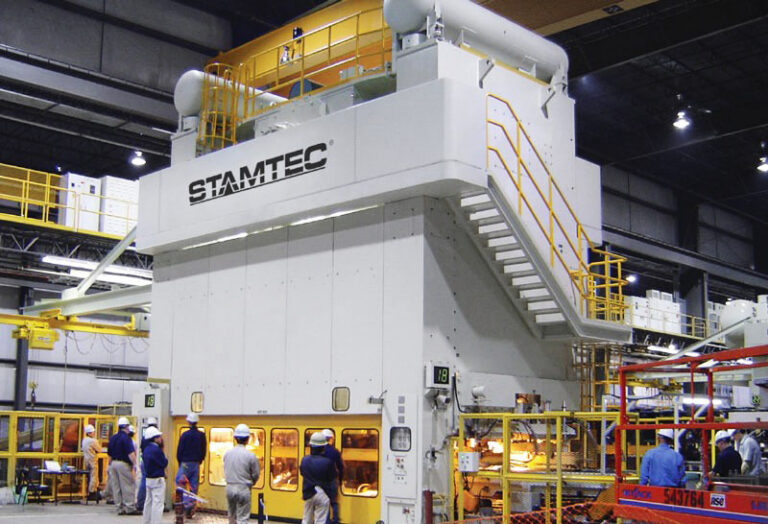
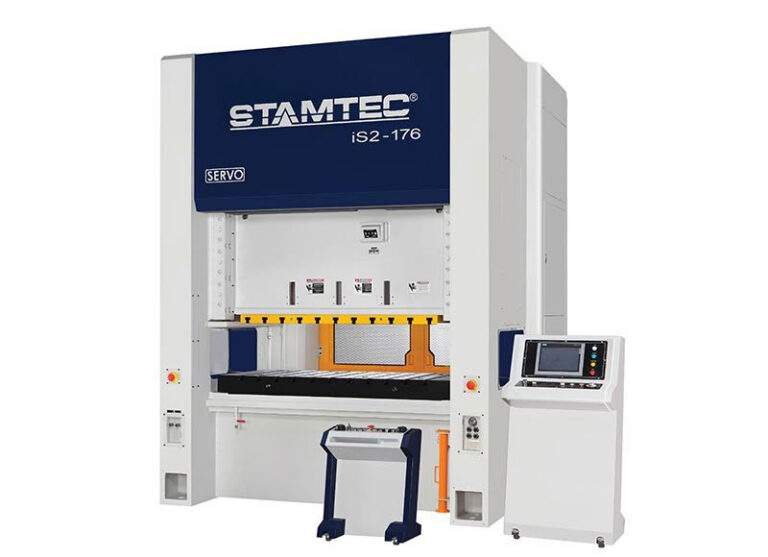


Eagle presses. PRI’s second press line is Eagle Press & Equipment: straight side mechanical presses for low to very high tonnage, servo presses, and the hydraulic presses below. Eagle lists blanking, heavy stamping, progressive and transfer dies, tandem lines and draw and precision stamping among their uses. See the Eagle line card.


Hydraulic Presses
A hydraulic press drives the slide with hydraulic cylinders instead of a flywheel and crank. It can apply its force anywhere in the stroke and hold it there, which suits deep drawing, forming, and die and mold tryout, though it generally runs slower than a mechanical press. PRI’s hydraulic presses are from Eagle, built on heavy steel plate frames, post-type or straight-sided and gib-guided, with PLC controls, consistent pressing tonnage and built-in overload protection.


See every hydraulic press in the hydraulic presses catalog. For hydraulic presses already in your plant, PRI offers Linear press control retrofits and point-of-operation safeguarding.
Press Ranges at a Glance
| Type | Series | Capacity (US tons unless noted) | Notes |
|---|---|---|---|
| Gap frame | GHS, OCP, GL1 (1-point); G2 (2-point) | 22–330 | GHS up to 750 SPM; OCP 38–330; GL1 link motion 88–220; G2 121–330 |
| Straight side | S1, SC1, ST1 (1-point); S2, GTX, SC2, SLX, PL2, HSD, HS2 (2-point) | 88–3,300 | SC1 and ST1 from 88; S1 165–2,650; S2 110–3,300; PL2 link motion 440–880; HSD high speed 66–330 |
| Eccentric-geared / transfer | 2-point and 4-point | 660–4,400 | Large progressive and transfer dies; link motion optional |
| Servo | iS1, iS2, SDS | 88 and up | iS1 single-point direct-drive gap frame (also D-frame) 88–330; iS2 two-point straight side 176–606; SDS straight side built to order (Stamtec shows a 2,750-ton SDS4) |
| Forging | LF1, KP, KT, KW2, KL2 (cold); WF1, KW1 (warm/hot) | 220–4,000 | Largest sizes on request |
| Eagle straight side | SC (crank); SE (eccentric-geared); SEL (eccentric link) | SC from 100; SE 400–3,500+; SEL 3,500+ | Eagle specializes in custom presses from 100 to 3,500+ tons |
| Eagle servo | High-torque servo | Up to 3,500 metric tons | Programmable stroke, velocity and dwell |
| Eagle hydraulic | SH (production); PH (tryout and spotting) | PH to 3,000+ | Post-type or straight-sided, gib-guided frames |
Stamtec rows from stamtec.com series pages; Eagle rows from eaglepresses.com; both checked 11/11/2026. Some of the largest sizes are built to order with specifications on request. Series catalogs are on the Stamtec line card and the Eagle line card. Confirm current ratings with PRI when you quote.
How to Choose a Press
- 1Work out the tonnageAdd up the force for every operation in the die (blanking, piercing, forming, drawing) and add a margin. Our formulas and press calculations sheet has the common formulas, or send PRI the part print and die design and we’ll run the numbers.
- 2Check where in the stroke you need itA mechanical press reaches full tonnage only near bottom. Deep draws and forming high in the stroke need a longer stroke, link motion, a servo press with full working energy at low speed, or a hydraulic press that applies its force anywhere in the stroke.
- 3Fit the dieThe die’s left-to-right and front-to-back size sets the bolster and slide area, and its shut height sets the die height and adjustment range. Long or off-center dies call for a two-point or four-point press.
- 4Set the speed and energyStrokes per minute at the feed length you need. High-speed presses cover thin, high-volume work; slower, heavier presses carry more energy per stroke for forming.
- 5Choose the frame and driveGap frame for access and lighter work, straight side for accuracy under heavy and off-center loads. Then crank, link motion, servo or hydraulic, based on the forming the part needs.
- 6Plan how the material gets in and outCoil feed or blanks, progressive or transfer die, and how parts and scrap leave the press. These set the passline, the window openings and the automation.
- 7Plan the controls, safety and sitePress control and die protection, point-of-operation safeguarding, the foundation or pit, press mounts, power and floor space.
Send what you have. A part print and a die drawing go a long way:
- Part print, material type and thickness
- Tonnage needed, or the die and its operations
- Die size (left-to-right, front-to-back) and shut height
- Stroke length and strokes per minute
- Coil fed or blank fed; progressive, transfer or line dies
- Coil width and passline, if coil fed
- Annual volume and parts per hour
- Floor space, ceiling height, and whether a pit is possible
- Electrical supply at the press
- Mechanical, servo or hydraulic, if you have a preference
- Press you are replacing, if any
- Control, die protection and safeguarding preferences
PRI Equips the Whole Press
PRI is more than a press distributor. We partner with our customers and supply complete systems for metal stamping, so the press arrives ready to run the job:
Press Brands PRI Offers


Press brakes, guillotine shears, fiber laser and plasma cutting machines are from Otinus: see the Otinus line card and the press brake, shear, fiber laser and plasma catalog pages.
Help From PRI
PRI is backed by 100 years of combined experience and a detailed understanding of the metal stamping industry. Our application engineers help you size the press, then plan and quote the line around it. Our customers trust us to help them reach their goals for safety, part quality and efficiency while keeping an eye on the bottom line.
Around the press itself, PRI arranges foundation work, transportation and rigging at your facility, and supports installation, startup and in-plant training. For the presses already on your floor, PRI offers OSHA/ANSI safeguarding surveys and stop-time measurements. See PRI services.
Press Downloads
Frequently Asked Questions
What types of power presses does PRI offer?
Stamtec mechanical presses (gap frame, straight side, link motion, high-speed and eccentric-geared transfer presses), servo presses and forging presses, from 22 to 4,400 tons, and Eagle straight side mechanical, servo and hydraulic presses. PRI also offers Otinus press brakes and shears for fabrication.
Should I buy a gap frame or a straight side press?
A gap frame (C-frame) press is open on three sides, so it is easy to load and suits lighter, centered work. A straight side press resists deflection under heavy and off-center loads and holds slide alignment for long progressive and transfer dies. Stamtec’s gap frames run to 330 tons; its straight side presses run from 88 to 3,300 tons.
What is a servo press, and when is it worth it?
A servo press replaces the flywheel, clutch and brake with a high-torque servo motor, so you can program the slide speed, position and pauses through the stroke and still have full working energy at low speed. It pays off when parts need controlled forming, drawing or coining, or when one press runs many different jobs.
What is a link motion press?
A mechanical press whose link drive slows the slide while it forms the part and speeds up the rest of the stroke. On Stamtec’s GL1, forming speed drops by as much as 40%, which helps material flow and reduces die impact, noise and vibration while keeping the production rate.
How much tonnage do I need?
Add the force for each operation in the die and add a margin, and check that the press delivers it at the point in the stroke where the work happens. Mechanical presses reach rated tonnage only near the bottom of the stroke. Send PRI the part print and die design and we’ll size the press.
Does PRI offer hydraulic presses?
Yes. Eagle SH hydraulic presses are built for constant pressing force in production work such as deep draws, spotting, plastics and insulation, and Eagle PH presses are built for die and mold tryout and spotting. For forming that needs slow, controlled motion or a dwell, a servo press is worth comparing too. For hydraulic presses already in your plant, PRI offers Linear press control retrofits and point-of-operation safeguarding.
Can PRI supply and install the whole press line?
Yes. PRI equips the press with coil feeding, quick die change, conveyors, lubrication, die protection, transfers and safeguarding, and arranges foundations, transportation, rigging and installation.
Related Guides
Coil Handling & Feeding · Quick Die Change · Press Transfer Systems · Die Protection & Press Automation · Lubrication · Conveyor Systems · Press Safeguarding · Press Mounts
Send us the part, the die size and the tonnage you think you need. PRI will recommend the press and the line around it, and quote it.
Shop Power PressesRequest a QuoteCall (800) 863-3164