

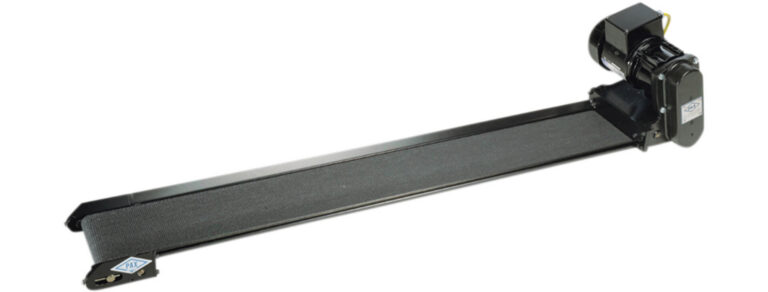
Under-die and part-out conveyors sit on the bolster under the die, or right beside it, and carry finished parts and slugs out of the die area, so operators don't reach in and parts don't pile up. Production Resources, Inc. (PRI) supplies PAX low-profile, drum motor and center drive conveyors and MPI part-out conveyors.
Shop Under-Die ConveyorsRequest a QuoteCall (800) 863-3164How They Work · Types · PAX Low Profile · Drum Motor · Choosing · What We Need · Brands · FAQs
How Under-Die Conveyors Work
An under-die conveyor sits on the bolster inside the die space, below the lower die and between the parallels. Parts and slugs drop through the die onto the belt, which carries them out the side or back of the press to a tote, a chute or a scrap conveyor. Height is the limit, so these conveyors are built very low: a PAX low-profile conveyor installs in 2 to 2.5 in.

Part-out conveyors do the same job from beside the press or under it: they catch parts as they leave the die and carry them laterally or up an incline to a bin, a tote or the next process.
Types of Under-Die & Part-Out Conveyors

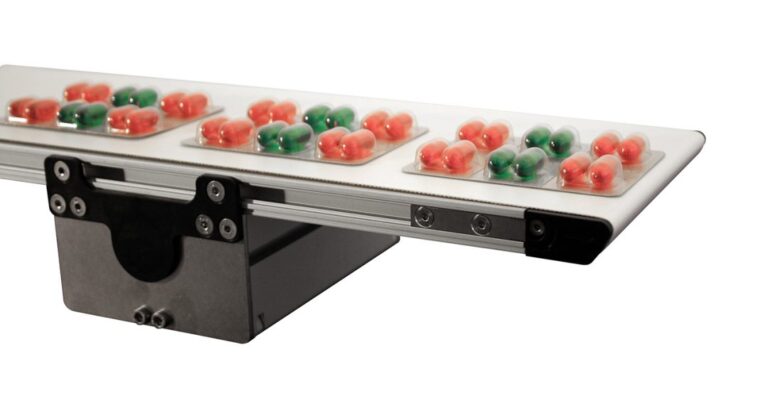
PAX Low Profile Under-Die Conveyors
The low-profile design fits where many conveyors will not. Built for on-bolster, under-die part and scrap removal, the patented conveyor is made for the stamping environment: the tray sides extend over the belt edges to keep scrap from getting under the belt, which extends belt life, and critical areas are sealed against die lube.
In the standard drive arrangement, the motor end sits on the bolster inside the bed area of the press, so it can often stay within existing guarding without extra guarding. The standard tension end is 2.5 in. high and hangs over the end of the bolster; an optional flush-mount tension end lays flat on the bolster (2 in. of height) where the conveyor can't pass all the way through the die.
PAX Drum Motor Conveyors
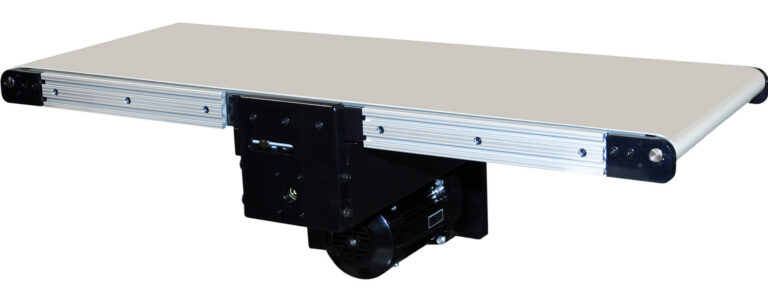
The PAX Model DMC drum motor conveyor removes parts and scrap from dies. Its geared motor is hermetically sealed inside a steel tube that serves as the drive pulley, which eliminates chains, sprockets and external motors, keeps the drive clean in a dirty press room and puts the motor where it fits tight spaces. PAX's Bulletin 550 rates the design at 40% less energy than a typical chain-driven conveyor. Each one is built to order.

PAX Center Drive and MPI Part-Out Conveyors
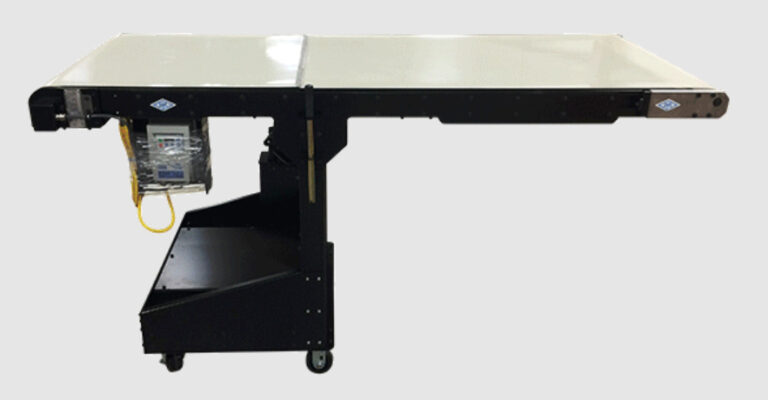
PAX center drive (CD) conveyors put the motor, drive pulley and belt tensioning under the conveyor, so the top is clear and the ends are only 2.1 in. high. PAX rates them for more capacity than its low-profile conveyor. Nominal widths run 4 to 20 in. and standard lengths 24 to 120 in.; a reversing drive turns the conveyor into a parts diverter, magnets in the wear strip hold steel parts down, and adjustable dividers keep the parts from a 2-out die in separate lanes.
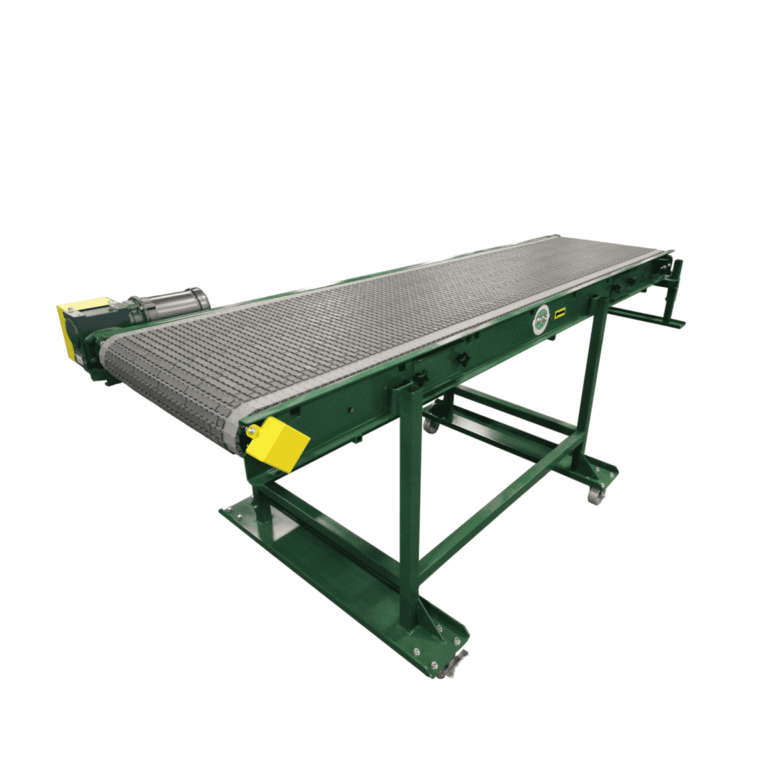
MPI part-out conveyors are rugged, low-profile belt conveyors for light to moderate material handling, from delicately formed parts to press scrap. They install beneath the press or die, carry material laterally or upward to the discharge, and run in sync with the press or continuously. Options include flat or cleated belts (anti-static, high-friction, food-grade or high-temperature), discharge chutes and diverters, sensors and stop gates, variable speed drives, magnetic hold-downs for inclines, stainless construction, and casters or floor stands. For hot slugs, turnings or heavy, sharp or oily scrap, MPI points to a hinged steel belt conveyor instead.
PAX EGD and EGDF electric shakers, also used under the die, are covered in the shaker conveyor guide.
How to Choose an Under-Die Conveyor
- 1Measure the heightFrom the bolster to the bottom of the lower die or the top of the parallels. PAX low-profile conveyors need 2 to 2.5 in., drum motor low-profile frames are under 2 in., and center drive ends are 2.1 in.
- 2Parts, slugs or bothSize and weight of the largest part, and whether slugs are small enough to get under the belt (a belt wiper helps). Parts dividers keep the parts from a 2-out die in separate lanes.
- 3Where it exitsOut the side, back or front of the press, and through which guarding. Pick the drive arrangement so the motor clears the die and the guards.
- 4Where it goes nextA tote, a chute, a scrap conveyor or the next process. A cantilever or tilting base, or a reversing conveyor feeding two bins, can get it there.
- 5Plan for die changesHow the conveyor comes out or stays in place between dies. Flush-mount tension ends, adjustable stands and cantilever bases make it faster.
- 6Tie it to die protectionA stopped-belt sensor wired into the press die protection circuit can stop the press if the belt stops.
A bolster drawing and a photo of the die area answer most of these:
- Press make, model and bolster size
- Height available under the die (bolster to die or parallels)
- Width and length, and which side it exits
- Part and slug size and weight
- Strokes or parts per minute
- Where parts go: tote, chute or scrap conveyor
- Guarding at the exit point
- Supply voltage and die protection tie-in
Under-Die Conveyor Brands PRI Offers


Help From PRI
PRI's Application Engineers can help with your metal stamping conveying requirements, with experience in under-die scrap, slug and part handling as well as part removal and transport. Call PRI for help selecting the right low-profile, drum motor or center drive conveyor or electric shaker. PRI supports installation and startup and trains your setup people. Where the conveyor leaves the die area through a light curtain or barrier guard, PRI's stop-time measurements and guarding analysis help you keep that opening safeguarded. See PRI services.
Under-Die Conveyor Downloads
Frequently Asked Questions
How much height does an under-die conveyor need?
PAX low-profile conveyors install in 2.5 in. with the standard tension end, or 2 in. with the flush-mount tension end. PAX drum motor conveyors with the low-profile frame are under 2 in. at the tension end, and PAX center drive conveyors have 2.1 in. ends.
What is a drum motor conveyor?
A belt conveyor whose drive motor and gearing are sealed inside the drive pulley. There are no chains, sprockets or external motors, so it needs little maintenance and fits tight spaces around a die.
Can an under-die conveyor stop the press if it jams?
Yes. A stopped-belt sensor can tie into the press die protection circuit so the press stops if the belt stops. The PAX low-profile conveyor is also designed to stop when the load on it goes over 20 lb, which flags a jam.
Should I use an under-die conveyor or a shaker?
A belt conveyor suits finished parts and slugs that need to come out in one direction, fast, and fits the lowest spaces. A press-mounted shaker suits scrap between the die uprights, with no belt to wear or cut. Either one often feeds a magnetic, hinged steel belt or floor shaker conveyor beside the press.
Does an under-die conveyor need extra guarding?
PAX's standard drive sits on the bolster inside the bed area, so it can often stay within existing guarding. Where a conveyor exits through a light curtain or guard, PRI can measure stop time and review the guarding with you.
Related Guides
Conveyor Systems · Shaker Conveyors · Magnetic Conveyors · Hinged Steel Belt, Drag & Slat Conveyors · Belt Conveyors · Quick Die Change
Send us the press, the height under the die and what comes out of it. PRI will recommend the under-die or part-out conveyor that fits, and quote it.
Shop Under-Die ConveyorsRequest a QuoteCall (800) 863-3164