


A coil straightener runs the strip between offset rolls to take out coil set and crossbow before it reaches the feed. PRI supplies powered, pull-through and cradle straighteners and sizes them to your material.
Shop StraightenersRequest a QuoteCall (800) 863-3164How They Work · Types · Cradle Straighteners · Sizing · What We Need · FAQs
How a Coil Straightener Works
Coil straightening machines are designed primarily to remove coil set (the curve left in the strip from being coiled) and reduce crossbow (the curve across its width).
The strip runs between upper and lower rolls that are offset from each other. Each roll bends it past its yield point in the opposite direction, and the bends get smaller toward the exit until the strip comes out flat. Moving the entry or exit rolls changes how much curve is taken out and in which direction, and adding rolls smooths ripples better.
Smaller rolls remove distortion better, but wider straighteners need larger rolls, or backup rolls, to keep the rolls themselves from deflecting. Material type, tensile strength, thickness, cross section and line speed all affect straightener requirements for roll spacing, roll diameter, number of rolls and horsepower.
Straightening ranges are usually rated on low-carbon steel; Rapid-Air rates its straighteners on commercial-grade low-carbon steel. More and more lines are specified to run a wide range of thicknesses with the lighter gauges in higher strengths, which makes straightening harder. That is why PRI asks for the yield strength at each width and thickness. See the Coil Handling & Feeding guide for where the straightener sits in the line.
Straightener Types
Pick a card for the product page in the catalog.


Cradle Straighteners
A coil cradle carries the coil on its outside diameter, on rolls, instead of on an arbor. The coil is lowered into the cradle, and on a cradle straightener the strip pays off straight into a straightening head at the exit, so one machine pays off and straightens. Cradles are suited to heavier-gauge coil; the strip then runs to an overhead or conventional loop ahead of the feed.
Stand-alone cradles and straighteners are also available, and coil cars or upenders get heavy coils into the cradle (see the coil reel guide).
How to Size a Straightener
- 1Material and yield strengthList each material with its tensile and yield strength. The straightener, coil containment and threading equipment are all sized to the hardest combination you run.
- 2Thickness at each widthCheck the corners: the thickest material at its widest, and the thinnest material at its highest strength. Ratings drop as width rises.
- 3Powered or pull-throughPull-through straighteners suit thinner material and save floor space, since there is no loop between straightener and feed. Powered straighteners pull from a non-powered reel or cradle and feed a free loop.
- 4Rolls and roll diameterMore rolls smooth ripples and coil set variation better; smaller rolls work light-gauge material harder; backup rolls keep wide, thin, high-strength strip flat.
- 5Line speedThe straightener has to keep up with the average demand of the feed. Rapid-Air ratings run from 700 to 4,100 inches per minute.
- 6Threading and loopHeavy material needs a hold-down, a threading drive and sometimes a crop shear for a clean leading edge. Choose a loop control: arm, ultrasonic or laser.
- 7Setup featuresMotorized passline and roll adjustment, roll position indicators or dial indicators, and a swing-open top all cut setup time.
Send what you have, or use our application note below:
- Material type, tensile and yield strength
- Thickness and width range (each combination)
- Coil ID, OD and weight
- Line speed, or feed length and strokes per minute
- Flatness and finish (marking) requirements
- Reel or cradle and feed in the line now
- Floor space, and whether a pit is possible
- Threading, hold-down or crop shear needs
Straightener Brands PRI Offers


Help From PRI
PRI’s Application Engineers size the straightener to your material, not just your thickness, and match it to the payoff and feed. PRI supports installation, startup and training, and can arrange coil loop pits and foundations through Delta Industrial (Additional Manufacturers). PRI also offers OSHA/ANSI safeguarding surveys and stop-time measurement for the presses your coil line feeds. See PRI services.
Straightener Downloads
Frequently Asked Questions
What does a coil straightening machine do?
A coil straightener is designed primarily to remove coil set and reduce crossbow before the strip reaches the feed. PRI offers straighteners from light pull-through models to Stamtec straighteners with 7 to 22 rolls and the 21-roll Waddington powered straightener.
How do I size a coil straightener?
Material type, tensile strength, thickness, cross section and line speed all affect the straightener’s roll spacing, roll diameter, number of rolls and horsepower. Give PRI the yield strength at each width and thickness you run.
Which coil straightening machine brands does PRI offer?
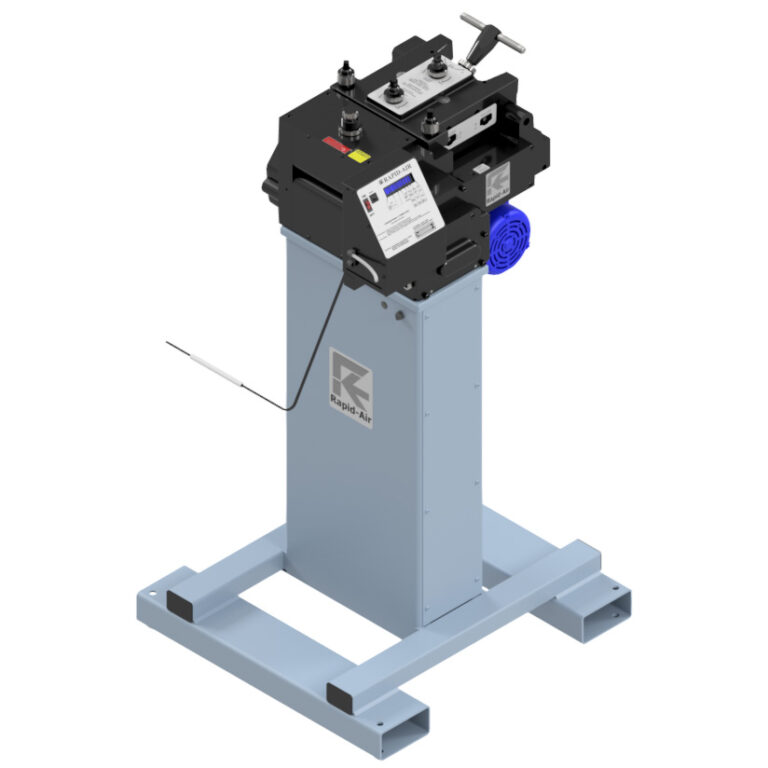
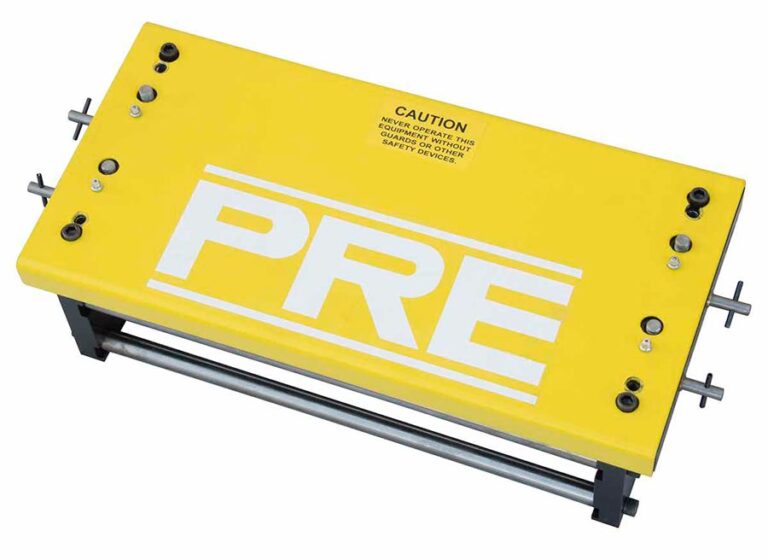
PRI offers Press Room Equipment (PRE) powered and pull-thru straighteners, Waddington powered straighteners and PRE cradle straighteners, Rapid-Air powered and pull-through straighteners, and Stamtec straighteners and 2-IN-1 and 3-IN-1 systems.
Should I use a powered or pull-through straightener?
A pull-through straightener is pulled by the feed and suits thinner material where floor space is tight. A powered straightener drives the strip itself, pulls from a non-powered reel or cradle, and feeds a free loop; it is the better fit for heavier, wider or higher-strength coil.
What is a cradle straightener?
A coil cradle and a straightener in one machine. The coil rests on rolls in the cradle instead of on an arbor and pays off straight into the straightener. PRE cradle straighteners handle coil widths to 60" and material to .300".
Can a straightener handle high-strength steel?
Yes, if it is sized for it. Ratings are usually given for low-carbon steel, so higher-strength material needs a larger machine for the same thickness. Send PRI the yield strength and we will size the straightener to it.
Related Guides
Coil Handling & Feeding (overview) · Air Feeds · Servo Feeds · Coil Reels · Pallet Decoilers · Cut-to-Length · Quick Die Change
Send us your material, yield strength, width and thickness range. PRI will recommend the straightener and quote it.
Shop StraightenersRequest a QuoteCall (800) 863-3164